
- Nonwoven Fabrics
- Tailor Made Masterbatch
- Plastic Masterbatch
- Chemical Fiber Masterbatch
- Functional Masterbatch
- Machinery
- Spunbond PP Nonwoven Masterbatch
- Mono Color Masterbatch
- Liquid Color Masterbatch
- Non-woven Masterbatch
- Polyester Fiber Masterbatch
- Nylon Fiber Masterbatch
- Polypropylene Fiber Masterbatch
- Lab Nonwoven Machine
- Lab BCF Machine
- Dryer
- Filler Masterbatch
- Influence Of Carrier Matching Of Chemical Fiber Masterbatch On Spinning Production
- Lab‑scale Spinning Test Equipment Empowers Pre‑verification Of Chemical‑fiber Masterbatch Formulas
- Plastic Masterbatch for Stable Coloring of Plastics
- Downstream Application Iteration Drives Refined Customization in Masterbatch Industry
- Chemical Fiber Masterbatch Adapts to Diverse Spinning Scenarios to Promote Dope‑dyeing Implementation
- Dope‑dyeing Drives Masterbatch Upgrading toward Customized & Functional Chemical‑fiber Raw Materials
- Mobile: +8613430333258
- WhatsApp: +8613430333258
- Email:wendy@ytlc-colour.com
- Address:DALAN INDUSTRIAL PARK, ZHANGXING TOWN, ZHAOYUAN CITY, SHANDONG, CHINA
Direct mass‑line trial production in chemical‑fiber masterbatch development consumes plenty of raw‑material and time resources and may bring production‑line shutdown risks. Lab‑scale spinning test equipment simulates real spinning conditions on small scale, detects potential defects of Chemical fiber masterbatch formula in advance and offers reference for mass production, which draws growing attention from masterbatch manufacturers.
Spinning test machine can simulate spinning scenarios of filament, staple fiber and BCF yarn. Complete procedures including masterbatch‑chip blending, melting, extrusion and forming can be finished under laboratory conditions. Researchers observe melt dispersion, record filter‑pressure variation and check yarn breakage, crystal spots and color difference. With test equipment, schemes of different carriers, pigments and additives can be compared rapidly to screen feasible formulas and avoid defects only exposed in mass production.
There are working‑condition gaps between lab‑scale spinning test machine and large‑scale production lines. Screw shear, heat‑exchange efficiency and throughput rate are not fully equivalent. Formulas qualified in lab test only prove feasibility instead of full adaptability for mass‑line. After lab trials, intermediate‑scale on‑machine test on client’s production line is still required for further fine‑tuning.
Downstream chemical‑fiber purchasers can also carry out parallel comparison tests for alternative Chemical fiber masterbatch with spinning test machine to evaluate practical performance of different formulas. Masterbatch suppliers equipped with complete lab‑test conditions shorten new‑product cycles and reduce trial‑and‑error cost for both sides. Combination of lab‑scale verification and on‑site debugging helps match formulas with production‑line processes and supports sound development of dope‑dyeing industry.
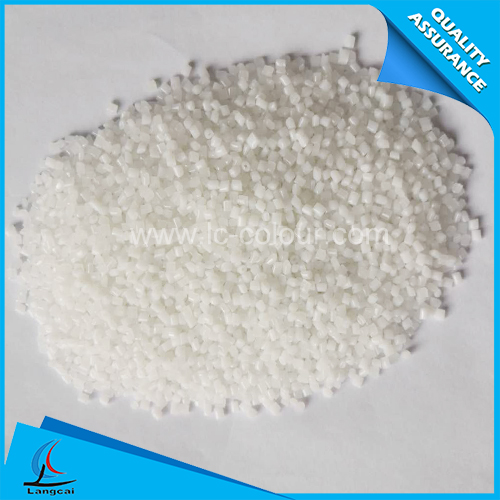
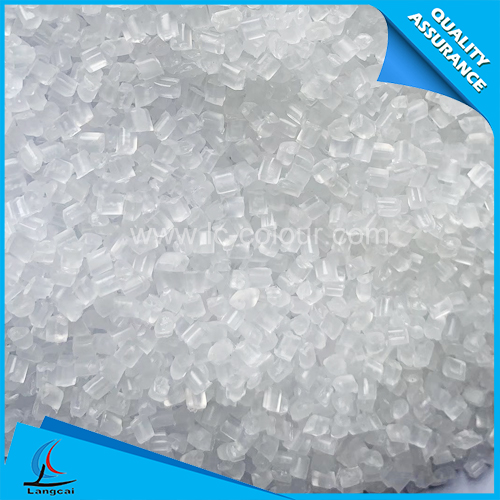
- Lab‑scale Spinning Test Equipment Empowers Pre‑verification Of Chemical‑
- Influence Of Carrier Matching Of Chemical Fiber Masterbatch On Spinning Production
- Downstream Application Iteration Drives Refined Customization in Masterbatch Industry
- Plastic Masterbatch for Stable Coloring of Plastics
- Dope‑dyeing Drives Masterbatch Upgrading toward Customized & Functional ChemicalR
- Chemical Fiber Masterbatch Adapts to Diverse Spinning Scenarios to Promote Dope‑dyei
- Key Control Points for Storage and Feeding‑System Matching of Mono Color Masterbatch
- Key Points of Metering‑System Control During Color‑Mixing with Mono Color Mast
- Application of High‑Fastness Polyester Fiber Masterbatch in Industrial Textiles
- Practical Points of Polyester Fiber Masterbatch for Recycled‑PET Spinning