
- Nonwoven Fabrics
- Tailor Made Masterbatch
- Plastic Masterbatch
- Chemical Fiber Masterbatch
- Functional Masterbatch
- Machinery
- Spunbond PP Nonwoven Masterbatch
- Mono Color Masterbatch
- Liquid Color Masterbatch
- Non-woven Masterbatch
- Polyester Fiber Masterbatch
- Nylon Fiber Masterbatch
- Polypropylene Fiber Masterbatch
- Lab Nonwoven Machine
- Lab BCF Machine
- Dryer
- Filler Masterbatch
- Influence Of Carrier Matching Of Chemical Fiber Masterbatch On Spinning Production
- Lab‑scale Spinning Test Equipment Empowers Pre‑verification Of Chemical‑fiber Masterbatch Formulas
- Plastic Masterbatch for Stable Coloring of Plastics
- Downstream Application Iteration Drives Refined Customization in Masterbatch Industry
- Chemical Fiber Masterbatch Adapts to Diverse Spinning Scenarios to Promote Dope‑dyeing Implementation
- Dope‑dyeing Drives Masterbatch Upgrading toward Customized & Functional Chemical‑fiber Raw Materials
- Mobile: +8613430333258
- WhatsApp: +8613430333258
- Email:wendy@ytlc-colour.com
- Address:DALAN INDUSTRIAL PARK, ZHANGXING TOWN, ZHAOYUAN CITY, SHANDONG, CHINA
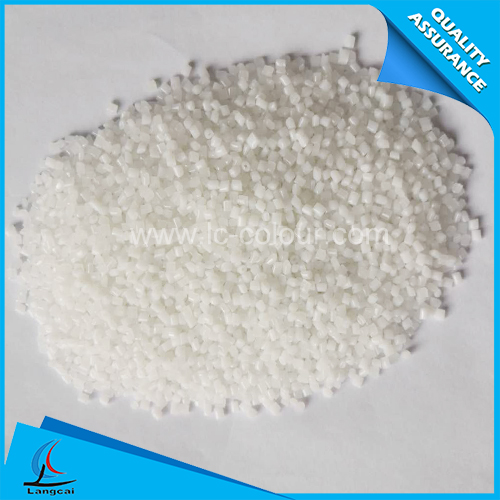
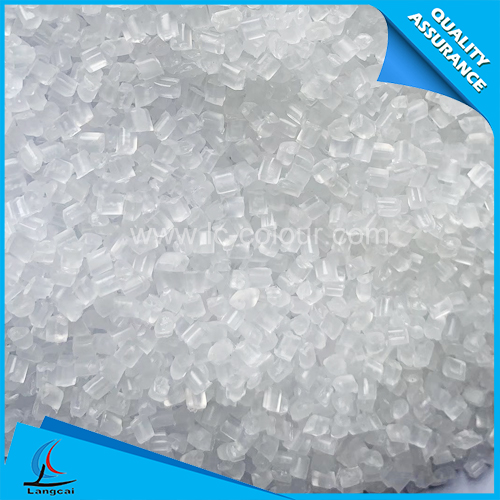
Chemical fiber masterbatch acts as core raw material for dope‑dyeing of chemical fiber. It is produced through mixing, extrusion and pelletizing with pigment, carrier resin and processing additives. During spinning production, many factories focus on color shade and color fastness, while overlooking matching performance between carrier resin of Chemical fiber masterbatch and base chips. Carrier compatibility greatly affects melt condition and spinning stability.
For Chemical fiber masterbatch, material and melt flow index of carrier resin shall be close to spinning substrate. Poor compatibility will form incompatible phases inside melt, speed up filter‑pressure build‑up of spinneret assembly, cause spinneret clogging and frequent yarn breakage, and generate crystal spots and particle defects on fiber surface to lower finished‑product yield. Due to big molecular‑structure differences among polypropylene, polyester and polyamide, Chemical fiber masterbatch with mismatched carriers shall not be used interchangeably.
For the same substrate, spinning processes bring different requirements on flow property of carrier in Chemical fiber masterbatch. High‑speed filament spinning demands high melt homogeneity; non‑woven staple‑fiber spinning has relatively wider tolerance, yet thermal stability of carrier still needs control to avoid volatile substances caused by thermal decomposition under high‑temperature processing. For custom mixed‑color Chemical fiber masterbatch, collaborative dispersion between various pigments and carrier shall also be considered.
Chemical‑fiber manufacturers are not advised for mass production directly when switching grades or color formulas of Chemical fiber masterbatch. Pilot test is recommended to record assembly‑pressure change, filament forming status and finished‑product color difference, and verify compatibility between carrier and whole process. Raw‑material drying shall be conducted to reduce hidden risks brought by moisture. Selecting suitable Chemical fiber masterbatch via trial test cuts machine‑stop loss and stabilizes quality of colored fiber.
- Lab‑scale Spinning Test Equipment Empowers Pre‑verification Of Chemical‑
- Influence Of Carrier Matching Of Chemical Fiber Masterbatch On Spinning Production
- Downstream Application Iteration Drives Refined Customization in Masterbatch Industry
- Plastic Masterbatch for Stable Coloring of Plastics
- Dope‑dyeing Drives Masterbatch Upgrading toward Customized & Functional ChemicalR
- Chemical Fiber Masterbatch Adapts to Diverse Spinning Scenarios to Promote Dope‑dyei
- Key Control Points for Storage and Feeding‑System Matching of Mono Color Masterbatch
- Key Points of Metering‑System Control During Color‑Mixing with Mono Color Mast
- Application of High‑Fastness Polyester Fiber Masterbatch in Industrial Textiles
- Practical Points of Polyester Fiber Masterbatch for Recycled‑PET Spinning