
- Nonwoven Fabrics
- Tailor Made Masterbatch
- Plastic Masterbatch
- Chemical Fiber Masterbatch
- Functional Masterbatch
- Machinery
- Spunbond PP Nonwoven Masterbatch
- Mono Color Masterbatch
- Liquid Color Masterbatch
- Non-woven Masterbatch
- Polyester Fiber Masterbatch
- Nylon Fiber Masterbatch
- Polypropylene Fiber Masterbatch
- Lab Nonwoven Machine
- Lab BCF Machine
- Dryer
- Filler Masterbatch
- Rapid Pressure Rise of Polyester Spinning Pack: How to Evaluate Dispersion Performance of Polyester Fiber Masterbatch
- Batch‑to‑batch Color Deviation of Colored Polyester Yarn: Easily‑ignored Carrier Compatibility of Polyester Fiber Masterbatch
- How Can Mono Color Masterbatch Adapt to Different Plastic Applications? Key Factors from Color Stability to Processing Efficiency
- Functional Masterbatch Development for Nonwovens: What Does the New Anti-Slip Technology Indicate?
- Peak Season for Plastic Processing in Golden Autumn|Yantai Liangcai Plastic Technology Co., Ltd.: Mono‑color Masterbatch Supports Flexible Color‑matching Production
- Plastic Processing Shifts to Multi‑variety & Small‑batch Production, Mono‑color Masterbatch Shows Industrial Value for Flexible Color Matching
- Mobile: +8613430333258
- WhatsApp: +8613430333258
- Email:wendy@ytlc-colour.com
- Address:DALAN INDUSTRIAL PARK, ZHANGXING TOWN, ZHAOYUAN CITY, SHANDONG, CHINA
Due to the continuous impact of the geopolitical situation in the Middle East, the navigation of the Strait of Hormuz has been blocked, and the global energy supply chain is facing severe challenges. On April 9th local time, US President Trump warned on social media that Iran must not charge fees for oil tankers passing through the strait, sending out a tough signal. The commander of the Iranian Islamic Revolutionary Guard Navy Command responded the next day, stating that during the temporary ceasefire period, the control of the strait has entered a new stage, and the navigation order has not returned to normal.
The current situation of navigation in the strait is extremely severe. Approximately 3,200 ships are stranded in the western area of the strait, including 800 oil tankers and cargo ships. Although there are 768 ships operating in the gulf area, navigation is restricted. The phenomenon of "dark navigation" where the ship identification system is turned off persists, seriously disrupting the normal shipping order.
Geopolitical conflicts directly triggered panic in the crude oil market, and the price trend showed extreme divergence. After the market opened on April 10th, the prices of international gold futures and spot prices turned downward, while the main contract of NYMEX WTI crude oil futures continued to rise. The panic sentiment in the spot market was obvious. European and Asian refiners actively purchased spot crude oil from the North Sea. The spot price of Forties Blend rose to nearly 147 US dollars per barrel, exceeding the level before the 2008 financial crisis. During the same period, the Brent June futures contract was quoted at 97 US dollars per barrel, and the spread between futures and spot prices widened to over 30 US dollars, reflecting the deep concern of the market about the shortage of physical crude oil. As of the close on April 9th, the May light crude oil futures on the New York Mercantile Exchange closed at 97.87 US dollars per barrel, and the June Brent crude oil futures in London closed at 95.92 US dollars per barrel.
A Goldman Sachs report indicates that the export volume of crude oil through the Strait of Hormuz has continued to decline, currently standing at only 8% of the normal level. After the ceasefire, the number of passing ships has been scarce and most of them are related to Iran. The supply of crude oil in the Middle East has almost been interrupted. Everbright Securities points out that as of March 26th, the combined supply from Saudi Arabia, Iraq, Kuwait, and the United Arab Emirates has decreased by approximately 8 million barrels per day. Meanwhile, the global available spare production capacity is only 1.5 to 2 million barrels per day. The gap between supply and demand has significantly widened. The long-term closure of oil fields may also cause permanent damage to production capacity. Even with a short-term ceasefire, supply is unlikely to recover quickly.
Several institutions have raised their oil price forecasts. Everbright Securities predicts that the average Brent oil price for the entire year of 2026 will be $85 per barrel. The continued restrictions on export channels, damage to oil reserves' production capacity, coupled with the fact that the increase in supply from the Americas is far less than the scale of production cuts in the Middle East, will result in a long-term global crude oil supply gap. In the short term, the progress of the reopening of the Strait of Hormuz for navigation remains a key variable affecting the trend of international oil prices.
Declaration: The content of this article is compiled from the internet and is copyrighted by the original author; if any infringement is found, please notify us immediately and we will delete it.
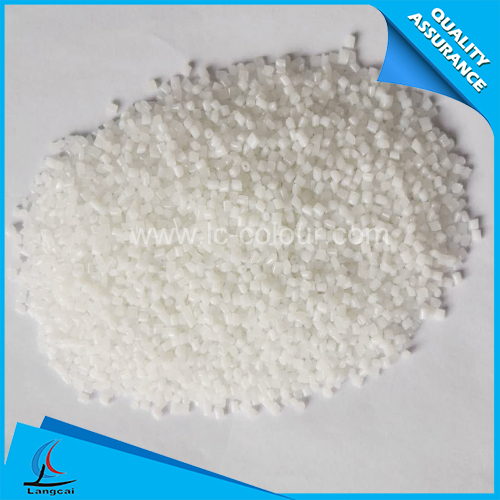
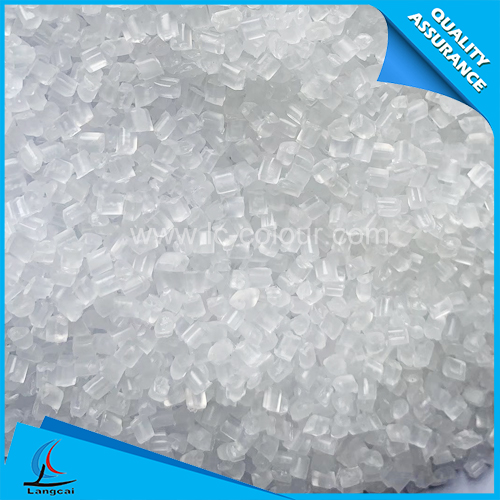
- Batch‑to‑batch Color Deviation of Colored Polyester Yarn: Easily‑ignored
- Rapid Pressure Rise of Polyester Spinning Pack: How to Evaluate Dispersion Performance of
- Functional Masterbatch Development for Nonwovens: What Does the New Anti-Slip Technology I
- How Can Mono Color Masterbatch Adapt to Different Plastic Applications? Key Factors from C
- Plastic Processing Shifts to Multi‑variety & Small‑batch Production, Mono̴
- Peak Season for Plastic Processing in Golden Autumn|Yantai Liangcai Plastic Technology Co.
- Spinning Refinement Upgrade Drives Process‑oriented Development of Polyester fiber m
- Polyester fiber masterbatch, Special Coloring Material for Chemical Fiber Dope‑dyein
- Steady Growth in Plastic Coloration Market, Mono Color Masterbatch Expands Application wit
- Custom Mono Color Masterbatch Supplier | Yantai Langcai Plastic Technology