
- Nonwoven Fabrics
- Tailor Made Masterbatch
- Plastic Masterbatch
- Chemical Fiber Masterbatch
- Functional Masterbatch
- Machinery
- Spunbond PP Nonwoven Masterbatch
- Mono Color Masterbatch
- Liquid Color Masterbatch
- Non-woven Masterbatch
- Polyester Fiber Masterbatch
- Nylon Fiber Masterbatch
- Polypropylene Fiber Masterbatch
- Lab Nonwoven Machine
- Lab BCF Machine
- Dryer
- Filler Masterbatch
- Rapid Pressure Rise of Polyester Spinning Pack: How to Evaluate Dispersion Performance of Polyester Fiber Masterbatch
- Batch‑to‑batch Color Deviation of Colored Polyester Yarn: Easily‑ignored Carrier Compatibility of Polyester Fiber Masterbatch
- How Can Mono Color Masterbatch Adapt to Different Plastic Applications? Key Factors from Color Stability to Processing Efficiency
- Functional Masterbatch Development for Nonwovens: What Does the New Anti-Slip Technology Indicate?
- Peak Season for Plastic Processing in Golden Autumn|Yantai Liangcai Plastic Technology Co., Ltd.: Mono‑color Masterbatch Supports Flexible Color‑matching Production
- Plastic Processing Shifts to Multi‑variety & Small‑batch Production, Mono‑color Masterbatch Shows Industrial Value for Flexible Color Matching
- Mobile: +8613430333258
- WhatsApp: +8613430333258
- Email:wendy@ytlc-colour.com
- Address:DALAN INDUSTRIAL PARK, ZHANGXING TOWN, ZHAOYUAN CITY, SHANDONG, CHINA
In the plastic processing stages such as injection molding, blown film production, and extrusion, the stability and uniformity of the product color are important indicators. Mono Color Masterbatch, as a coloring agent that uniformly loads high-concentration pigments or dyes into the resin carrier, provides a simple color matching solution for plastic products.
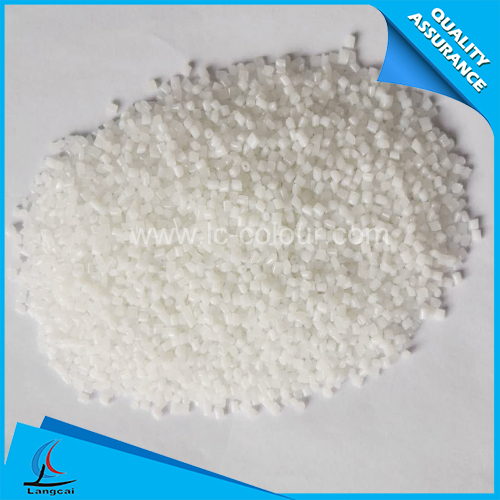
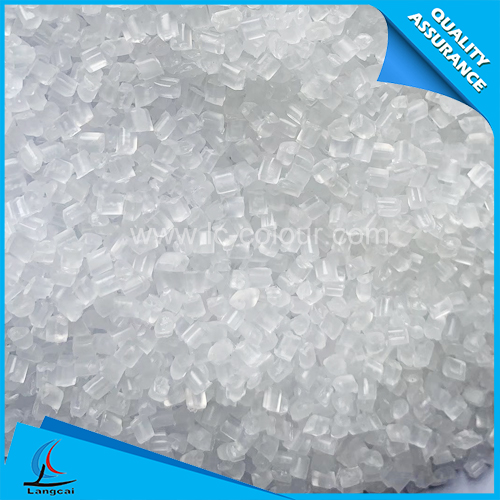
The composition of a Mono Color Masterbatch is relatively straightforward: pigments (or dyes), carrier resin, and dispersing aids are mixed at high speed, then melted and extruded, and finally granulated. The carrier resin is usually selected from materials that are compatible with the base material of the product, such as polyethylene, polypropylene, or ABS. The pigment content is typically in the range of 20% to 50%, and can be adjusted according to the requirements for transparency or covering power.
Compared with direct coloring with pigment powder, the dispersion effect of single-color masterbatch is more uniform. Pigment powder is prone to scattering during transportation and weighing, causing dust pollution in the working environment; while the morphology of the masterbatch is regular and there is no dust, and it can be directly put into the hopper after being mixed in proportion with the base material. The common addition ratios range from 1% to 8%, depending on the color depth and the wall thickness of the product.
Black masterbatch is a common type among Mono Color Masterbatches. It uses carbon black as the coloring component and is used in scenarios where resistance to ultraviolet aging is required, such as express bags, drainage pipes, and cable sheaths. White masterbatch is mainly composed of titanium dioxide and is suitable for household appliance shells, food packaging films, and plastic tableware. Red, yellow, blue, and other colored masterbatches are used in toys, daily necessities, and cosmetic containers, helping to achieve a bright appearance with minimal batch-to-batch variations.
During actual operation, it is recommended that the Mono Color Masterbatch be dry-mixed with the base material in the mixing machine for about 1 to 3 minutes. After the masterbatch and the raw material particles have fully contacted, it should then be introduced into the injection molding or extrusion machine. The processing temperature should be set according to the melting range of the carrier resin to avoid high temperatures causing pigment decomposition or color marks on the surface of the product.
In terms of storage, the single-color masterbatch should be placed in a cool and dry environment to prevent bridging at the discharge port due to moisture absorption. After opening, the moisture-proof sealing strip can be used to maintain the activity of the raw materials and avoid the formation of bubbles or silver streak defects due to the introduction of moisture.
Selecting the appropriate single-color masterbatch can help the product factory shorten the color-changing time, simplify the color-mixing process, and reduce the defective rate caused by color differences. Currently, in daily-use product packaging, building material extrusion, automotive interior decoration, and film production, single-color masterbatch has become a basic plastic coloring method.
Yantai Langcai Plastic Technology Co.,Ltd. is located in Zhaoyuan City, the "Gold Capital of China", which is famous for its gold production. Provincial Highway S608 Weiwu Expressway is 2.5 kilometers south of the Zhaoyuan exit of Longkou Development Zone and east of the road. It is only 100 kilometers away from Yantai and Qingdao airports, and the transportation is very convenient. Yantai Langcai Plastic Technology Co.,Ltd. mainly produces: polyester fiber masterbatch, nylon fiber masterbatch, polypropylene fiber masterbatch, plastic masterbatch (injection masterbatch, coating masterbatch, braided silk masterbatch), chemical fiber masterbatch (Polypropylene filament masterbatch, non-woven fabric masterbatch, polypropylene BCF masterbatch), functional masterbatch (anti-aging masterbatch, flame retardant masterbatch, antistatic masterbatch, double anti-bacterial masterbatch, antibacterial masterbatch, Hydrophilic masterbatch), modified materials, etc.
- Batch‑to‑batch Color Deviation of Colored Polyester Yarn: Easily‑ignored
- Rapid Pressure Rise of Polyester Spinning Pack: How to Evaluate Dispersion Performance of
- Functional Masterbatch Development for Nonwovens: What Does the New Anti-Slip Technology I
- How Can Mono Color Masterbatch Adapt to Different Plastic Applications? Key Factors from C
- Plastic Processing Shifts to Multi‑variety & Small‑batch Production, Mono̴
- Peak Season for Plastic Processing in Golden Autumn|Yantai Liangcai Plastic Technology Co.
- Spinning Refinement Upgrade Drives Process‑oriented Development of Polyester fiber m
- Polyester fiber masterbatch, Special Coloring Material for Chemical Fiber Dope‑dyein
- Steady Growth in Plastic Coloration Market, Mono Color Masterbatch Expands Application wit
- Custom Mono Color Masterbatch Supplier | Yantai Langcai Plastic Technology