
- Nonwoven Fabrics
- Tailor Made Masterbatch
- Plastic Masterbatch
- Chemical Fiber Masterbatch
- Functional Masterbatch
- Machinery
- Spunbond PP Nonwoven Masterbatch
- Mono Color Masterbatch
- Liquid Color Masterbatch
- Non-woven Masterbatch
- Polyester Fiber Masterbatch
- Nylon Fiber Masterbatch
- Polypropylene Fiber Masterbatch
- Lab Nonwoven Machine
- Lab BCF Machine
- Dryer
- Filler Masterbatch
- How Can Mono Color Masterbatch Adapt to Different Plastic Applications? Key Factors from Color Stability to Processing Efficiency
- Functional Masterbatch Development for Nonwovens: What Does the New Anti-Slip Technology Indicate?
- Peak Season for Plastic Processing in Golden Autumn|Yantai Liangcai Plastic Technology Co., Ltd.: Mono‑color Masterbatch Supports Flexible Color‑matching Production
- Plastic Processing Shifts to Multi‑variety & Small‑batch Production, Mono‑color Masterbatch Shows Industrial Value for Flexible Color Matching
- Polyester fiber masterbatch, Special Coloring Material for Chemical Fiber Dope‑dyeing
- Spinning Refinement Upgrade Drives Process‑oriented Development of Polyester fiber masterbatch
- Mobile: +8613430333258
- WhatsApp: +8613430333258
- Email:wendy@ytlc-colour.com
- Address:DALAN INDUSTRIAL PARK, ZHANGXING TOWN, ZHAOYUAN CITY, SHANDONG, CHINA
Coloring plastic products is not simply a matter of adding pigments to a polymer. Different resin systems, processing temperatures, screw shear conditions and product thicknesses can all affect the final color appearance. For plastic processors that require consistent color performance, selecting a coloring material compatible with their processing conditions has therefore become an important part of raw-material management.
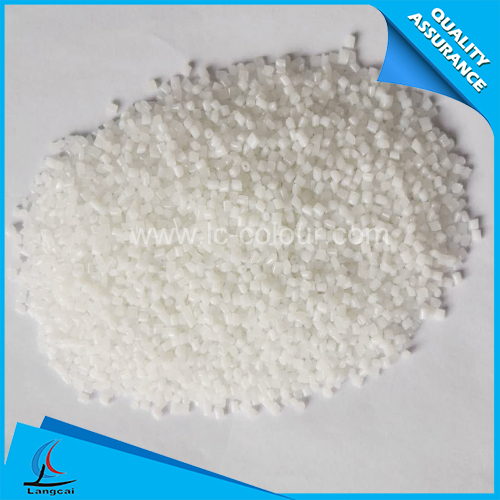
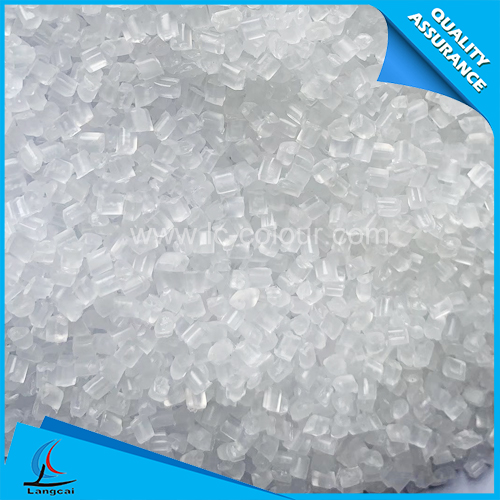
Mono Color Masterbatch is generally produced by combining pigments, carrier resins and selected additives through mixing, dispersion and pelletizing processes. Compared with directly adding pigment powder, masterbatch provides a concentrated and pre-dispersed form of the coloring components, making dosing more convenient during plastic processing.
Different applications have different requirements. Films, nonwoven materials, packaging products and household plastic products may focus on different aspects of color performance. Some require strong color intensity, while others pay greater attention to batch-to-batch consistency. In some applications, color performance must also be balanced with processing characteristics.
This means that Mono Color Masterbatch should be selected according to the specific resin system and processing conditions rather than treated as a universal material.
Pigment dispersion is an important factor in the manufacturing process. Poor dispersion may lead to color spots or streaks after the masterbatch enters the plastic-processing equipment. Proper control of mixing, melting, shear and pelletizing can therefore influence the usability of the final product.
Yantai Langcai Plastic Technology Co., Ltd. has been engaged in plastic materials and related technical development. Public patent information shows that the company has technical achievements related to melt-granulation equipment and has also conducted research into functional masterbatch products.
When purchasing Mono Color Masterbatch, plastic processors can evaluate factors including resin compatibility, addition ratio, color consistency, dispersion performance and processing temperature. For continuous production lines, consistency between raw-material batches can also influence the frequency of process adjustments.
From this perspective, masterbatch is more than a material used simply to add color. A stable formulation, suitable carrier resin and compatible processing conditions all contribute to the performance of the final plastic product.
As plastic products move toward lighter structures, functional features and more specialized applications, Mono Color Masterbatch development is also becoming increasingly application-oriented. For masterbatch manufacturers, understanding downstream processing requirements and adjusting formulations accordingly can improve compatibility between materials and end-product manufacturing.
- Functional Masterbatch Development for Nonwovens: What Does the New Anti-Slip Technology I
- How Can Mono Color Masterbatch Adapt to Different Plastic Applications? Key Factors from C
- Plastic Processing Shifts to Multi‑variety & Small‑batch Production, Mono̴
- Peak Season for Plastic Processing in Golden Autumn|Yantai Liangcai Plastic Technology Co.
- Spinning Refinement Upgrade Drives Process‑oriented Development of Polyester fiber m
- Polyester fiber masterbatch, Special Coloring Material for Chemical Fiber Dope‑dyein
- Steady Growth in Plastic Coloration Market, Mono Color Masterbatch Expands Application wit
- Custom Mono Color Masterbatch Supplier | Yantai Langcai Plastic Technology
- Refined Upgrading of Plastic Processing, Mono Color Masterbatch Evolves Toward Eco-friendl
- Preferred Raw Material for Stable Coloring, Mono Color Masterbatch for Multi-category Plas