
- Nonwoven Fabrics
- Tailor Made Masterbatch
- Plastic Masterbatch
- Chemical Fiber Masterbatch
- Functional Masterbatch
- Machinery
- Spunbond PP Nonwoven Masterbatch
- Mono Color Masterbatch
- Liquid Color Masterbatch
- Non-woven Masterbatch
- Polyester Fiber Masterbatch
- Nylon Fiber Masterbatch
- Polypropylene Fiber Masterbatch
- Lab Nonwoven Machine
- Lab BCF Machine
- Dryer
- Filler Masterbatch
- How Can Mono Color Masterbatch Adapt to Different Plastic Applications? Key Factors from Color Stability to Processing Efficiency
- Functional Masterbatch Development for Nonwovens: What Does the New Anti-Slip Technology Indicate?
- Peak Season for Plastic Processing in Golden Autumn|Yantai Liangcai Plastic Technology Co., Ltd.: Mono‑color Masterbatch Supports Flexible Color‑matching Production
- Plastic Processing Shifts to Multi‑variety & Small‑batch Production, Mono‑color Masterbatch Shows Industrial Value for Flexible Color Matching
- Polyester fiber masterbatch, Special Coloring Material for Chemical Fiber Dope‑dyeing
- Spinning Refinement Upgrade Drives Process‑oriented Development of Polyester fiber masterbatch
- Mobile: +8613430333258
- WhatsApp: +8613430333258
- Email:wendy@ytlc-colour.com
- Address:DALAN INDUSTRIAL PARK, ZHANGXING TOWN, ZHAOYUAN CITY, SHANDONG, CHINA
As nonwoven materials continue to enter a wider range of applications, downstream manufacturers are paying attention not only to basic properties such as strength, softness and appearance, but also to friction performance, processing stability and material compatibility.
Recently published patent information shows that Yantai Langcai Plastic Technology Co., Ltd. filed a patent titled “Anti-slip Masterbatch for Increasing the Friction Coefficient of Nonwoven Fabric and Preparation Method Thereof.” The application was filed on July 5, 2025 and published on August 8, 2025. This publicly available technical development provides an indication of the company's work in functional masterbatch materials.
Why is friction performance relevant to nonwoven production? In certain packaging, handling, lamination and industrial-material applications, surface friction can influence the contact behavior between materials. When a product requires a certain level of slip resistance, modifying the polymer through functional masterbatch can provide one possible technical approach.
From a masterbatch-development perspective, functional materials differ from conventional color masterbatch. Color masterbatch primarily addresses visual appearance, while functional masterbatch needs to consider compatibility between additives and polymer matrices, dispersion characteristics and processing stability.
Yantai Langcai has also disclosed technical developments related to plastic-processing equipment and functional materials. Public patent records include a melt-granulation device with a self-cleaning structure and equipment related to filament spunbonded nonwoven production.
These public technical developments show a connection between material development and processing equipment. Changes in formulation may affect processing temperature, shear conditions, extrusion and pelletizing, while improvements in equipment can provide more stable conditions for functional-material production.
For the nonwoven industry, this material-equipment interaction is becoming increasingly relevant. As downstream applications become more specialized, manufacturers are moving beyond the basic question of whether a material can be processed. They are also considering whether it can operate consistently under specific equipment and process conditions.
The newly published anti-slip masterbatch patent provides a useful example of how masterbatch development can respond to a specific application requirement.
For the wider masterbatch industry, this type of development highlights the growing importance of connecting material properties, manufacturing processes and end-use requirements.
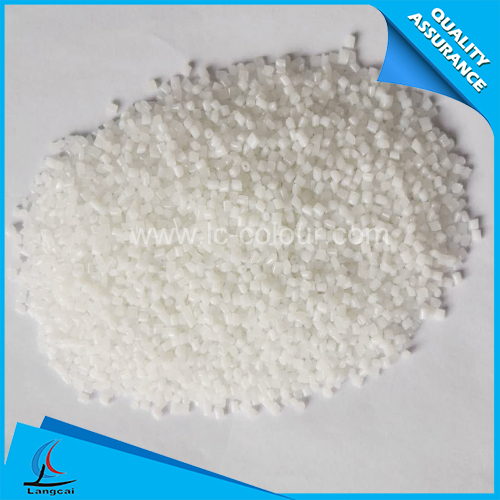
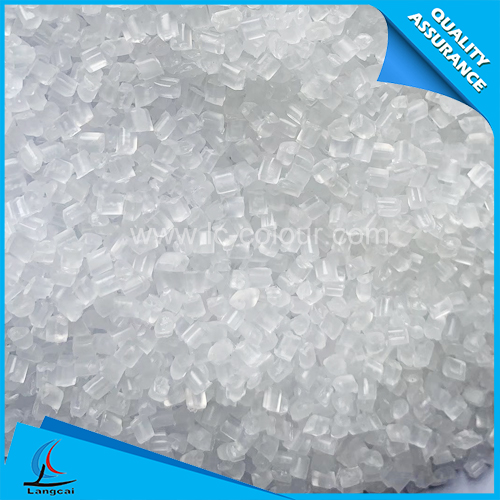
- Functional Masterbatch Development for Nonwovens: What Does the New Anti-Slip Technology I
- How Can Mono Color Masterbatch Adapt to Different Plastic Applications? Key Factors from C
- Plastic Processing Shifts to Multi‑variety & Small‑batch Production, Mono̴
- Peak Season for Plastic Processing in Golden Autumn|Yantai Liangcai Plastic Technology Co.
- Spinning Refinement Upgrade Drives Process‑oriented Development of Polyester fiber m
- Polyester fiber masterbatch, Special Coloring Material for Chemical Fiber Dope‑dyein
- Steady Growth in Plastic Coloration Market, Mono Color Masterbatch Expands Application wit
- Custom Mono Color Masterbatch Supplier | Yantai Langcai Plastic Technology
- Refined Upgrading of Plastic Processing, Mono Color Masterbatch Evolves Toward Eco-friendl
- Preferred Raw Material for Stable Coloring, Mono Color Masterbatch for Multi-category Plas