
- Nonwoven Fabrics
- Tailor Made Masterbatch
- Plastic Masterbatch
- Chemical Fiber Masterbatch
- Functional Masterbatch
- Machinery
- Spunbond PP Nonwoven Masterbatch
- Mono Color Masterbatch
- Liquid Color Masterbatch
- Non-woven Masterbatch
- Polyester Fiber Masterbatch
- Nylon Fiber Masterbatch
- Polypropylene Fiber Masterbatch
- Lab Nonwoven Machine
- Lab BCF Machine
- Dryer
- Filler Masterbatch
- Custom Mono Color Masterbatch Supplier | Yantai Langcai Plastic Technology
- Steady Growth in Plastic Coloration Market, Mono Color Masterbatch Expands Application with Flexible Advantages
- Preferred Raw Material for Stable Coloring, Mono Color Masterbatch for Multi-category Plastic Molding
- Refined Upgrading of Plastic Processing, Mono Color Masterbatch Evolves Toward Eco-friendly Customization
- Polyester Fiber Masterbatch Matches Spinning Production for Stable Dope Dyeing of Fibers
- Rising Demand for Fine Spinning Boosts Custom R&D of Polyester Fiber Masterbatch
- Mobile: +8613430333258
- WhatsApp: +8613430333258
- Email:wendy@ytlc-colour.com
- Address:DALAN INDUSTRIAL PARK, ZHANGXING TOWN, ZHAOYUAN CITY, SHANDONG, CHINA
In December 2025, the international maritime shipping market, which should have entered the traditional off-season for freight transportation, witnessed a round of intense price hikes. Leading shipping giants such as CMA CGM of France and Haber-Lloyd of Germany have successively issued announcements on freight rate adjustments, covering multiple core routes from Asia to Northern Europe, the Mediterranean, Africa, and Latin America. The adjustments involve multiple dimensions including FAK base rates, PSS peak season surcharges, and HLC heavy cargo surcharges. The freight rates for 40-foot containers on some routes have reached as high as $8,500. It has drawn widespread attention from the foreign trade and logistics industries.
The impact of this freight rate increase on enterprises of different industries and scales shows a differentiated trend. For foreign trade export-oriented enterprises, especially small, medium and micro-sized ones with Europe, Africa and Latin America as their main markets, the increase in freight rates directly raises logistics costs. Some low-margin products even face the predicament of "transportation costs devouring profits". Based on the freight rate of $8,500 for a 40-foot container from Asia to North Africa, it has risen by over 50% compared to the average price at the beginning of the year. If a company exports 100 containers annually, it will have to spend more than $200,000 more on freight alone.
Freight forwarding enterprises are confronted with a situation where "opportunities and challenges coexist". On the one hand, the increase in freight rates has led to a rise in agency service fees. Moreover, against the backdrop of tight space, freight forwarders with stable booking resources have enhanced their bargaining power. On the other hand, the intensification of market freight rate fluctuations has also increased the difficulty of cost accounting. Some long-term contract customers have proposed renegotiation demands due to freight rate inversion. Freight forwarders need to find a balance between shipping companies and cargo owners to avoid customer loss.
Regarding the future trend of the industry, industry insiders believe that freight rates will remain high in the short term, but in the long term, the risk of capacity returning needs to be guarded against. Currently, CMA CGM has taken the lead in attempting to resume its Red Sea route. If the geopolitical risks ease, the capacity that detour around the Cape of Good Hope will return to the Suez Canal, and the global supply of space will increase significantly. In the absence of synchronous growth in demand, freight rates may face downward pressure. It is suggested that foreign trade enterprises closely monitor the dynamics of shipping routes and reduce the risk of cost fluctuations by signing long-term contracts and optimizing transportation plans (such as consolidating containers and choosing alternative ports). Freight forwarders need to enhance communication and collaboration with shipping companies, secure space resources in advance, and at the same time provide customers with flexible freight rate plans to cope with market uncertainties.
Declaration: The content of this article is compiled from the Internet and the copyright belongs to the original author. If there is any infringement, please inform us in time and contact us for deletion.
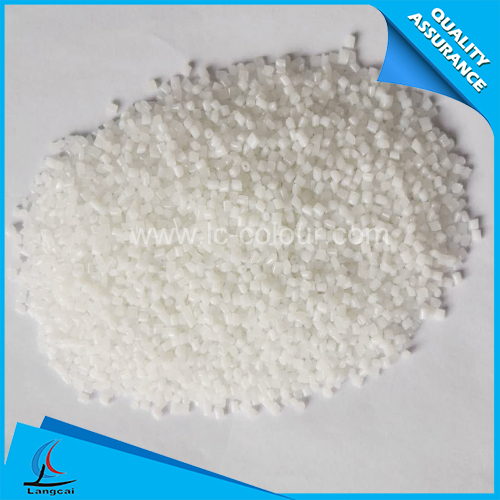

- Steady Growth in Plastic Coloration Market, Mono Color Masterbatch Expands Application wit
- Custom Mono Color Masterbatch Supplier | Yantai Langcai Plastic Technology
- Refined Upgrading of Plastic Processing, Mono Color Masterbatch Evolves Toward Eco-friendl
- Preferred Raw Material for Stable Coloring, Mono Color Masterbatch for Multi-category Plas
- Rising Demand for Fine Spinning Boosts Custom R&D of Polyester Fiber Masterbatch
- Polyester Fiber Masterbatch Matches Spinning Production for Stable Dope Dyeing of Fibers
- Rising Custom Color Demand Drives Refined & Green Upgrade of Complex Color Masterbatch Ind
- Sourcing Guide for Complex Color Masterbatch for Plastic Processors
- Mono Color Masterbatch Industry Accelerates Towards Refinement and Green Development
- How to Choose High-Quality Mono Color Masterbatch? A Practical Procurement Guide