
- Nonwoven Fabrics
- Tailor Made Masterbatch
- Plastic Masterbatch
- Chemical Fiber Masterbatch
- Functional Masterbatch
- Machinery
- Spunbond PP Nonwoven Masterbatch
- Mono Color Masterbatch
- Liquid Color Masterbatch
- Non-woven Masterbatch
- Polyester Fiber Masterbatch
- Nylon Fiber Masterbatch
- Polypropylene Fiber Masterbatch
- Lab Nonwoven Machine
- Lab BCF Machine
- Dryer
- Filler Masterbatch
- Rapid Pressure Rise of Polyester Spinning Pack: How to Evaluate Dispersion Performance of Polyester Fiber Masterbatch
- Batch‑to‑batch Color Deviation of Colored Polyester Yarn: Easily‑ignored Carrier Compatibility of Polyester Fiber Masterbatch
- How Can Mono Color Masterbatch Adapt to Different Plastic Applications? Key Factors from Color Stability to Processing Efficiency
- Functional Masterbatch Development for Nonwovens: What Does the New Anti-Slip Technology Indicate?
- Peak Season for Plastic Processing in Golden Autumn|Yantai Liangcai Plastic Technology Co., Ltd.: Mono‑color Masterbatch Supports Flexible Color‑matching Production
- Plastic Processing Shifts to Multi‑variety & Small‑batch Production, Mono‑color Masterbatch Shows Industrial Value for Flexible Color Matching
- Mobile: +8613430333258
- WhatsApp: +8613430333258
- Email:wendy@ytlc-colour.com
- Address:DALAN INDUSTRIAL PARK, ZHANGXING TOWN, ZHAOYUAN CITY, SHANDONG, CHINA
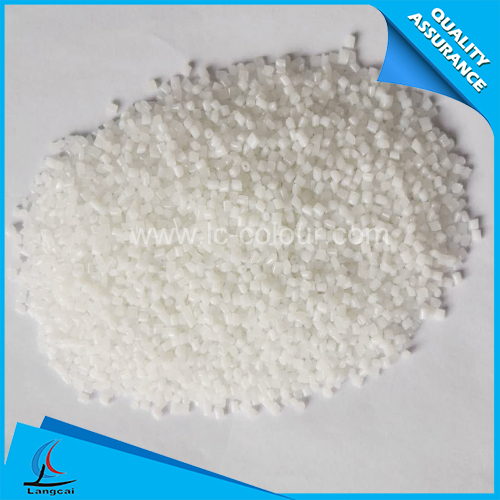
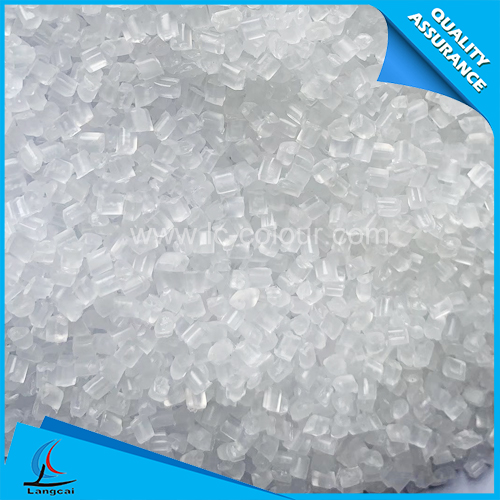
In the field of plastic product processing, Mono Color Masterbatch serves as the core raw material for achieving precise coloring. Due to its stable color performance and convenient usage method, it has become a common choice in injection molding, blown film, extrusion and other processes. This coloring agent, which uniformly loads high-concentration pigments onto the carrier resin, is usually also referred to as colored masterbatch or color motherbatch.
The advantage of Mono Color Masterbatch lies in its precise color control. Compared with traditional coloring powders, plastic coloring masterbatch adopts a pre-dispersed process, where the pigment particles are evenly distributed in the carrier, avoiding the problem of dust flying and significantly improving the color difference between batches. In the application of injection molding color masterbatch, this feature is particularly crucial - producers only need to mix the single-color masterbatch with the base material in the prescribed proportion to obtain a product color with good reproducibility, reducing machine adjustment time and material loss.
From the perspective of dispersion performance, high-quality color masterbatches have strict requirements for the particle size of pigments and the ratio of dispersants. When the masterbatch is melted and mixed in the screw, the pigment aggregates can fully open, forming a uniform microscopic distribution. This directly affects the coloring effect of thin-walled products such as films and fine-denier fibers: Mono Color Masterbatches with high dispersion can avoid appearance defects such as color spots and flow marks, ensuring the surface smoothness and color saturation of the product.
In terms of material compatibility, the carrier resin of plastic color masterbatches needs to be matched according to the type of base material. Whether it is polyethylene or polypropylene in the polyolefin system, or polystyrene or ABS used in engineering plastics, there are corresponding Mono Color Masterbatch models available for selection. This targeted carrier design ensures that the color masterbatch reaches a compatible state with the base material at the processing temperature, without affecting the original mechanical properties and processing fluidity of the product.
Furthermore, the Mono Color Masterbatch also demonstrates flexibility in terms of functional expansion. Besides the basic coloring function, by blending various additives such as UV-resistant, anti-static, and flame-retardant agents, the coloring and modification can be completed simultaneously. This approach simplifies the mixing process and reduces the error risks caused by the addition of multiple components.
With the increasing demands for appearance quality and environmental protection of plastic products, Mono Color Masterbatches, due to their features of clean production, precise measurement and stable batches, continue to play a significant role in the fields of home appliances, automobiles, packaging and daily necessities. Reasonable selection of colored masterbatches helps manufacturing enterprises ensure the color effect while improving processing efficiency and product consistency.
- Batch‑to‑batch Color Deviation of Colored Polyester Yarn: Easily‑ignored
- Rapid Pressure Rise of Polyester Spinning Pack: How to Evaluate Dispersion Performance of
- Functional Masterbatch Development for Nonwovens: What Does the New Anti-Slip Technology I
- How Can Mono Color Masterbatch Adapt to Different Plastic Applications? Key Factors from C
- Plastic Processing Shifts to Multi‑variety & Small‑batch Production, Mono̴
- Peak Season for Plastic Processing in Golden Autumn|Yantai Liangcai Plastic Technology Co.
- Spinning Refinement Upgrade Drives Process‑oriented Development of Polyester fiber m
- Polyester fiber masterbatch, Special Coloring Material for Chemical Fiber Dope‑dyein
- Steady Growth in Plastic Coloration Market, Mono Color Masterbatch Expands Application wit
- Custom Mono Color Masterbatch Supplier | Yantai Langcai Plastic Technology