
- Nonwoven Fabrics
- Tailor Made Masterbatch
- Plastic Masterbatch
- Chemical Fiber Masterbatch
- Functional Masterbatch
- Machinery
- Spunbond PP Nonwoven Masterbatch
- Mono Color Masterbatch
- Liquid Color Masterbatch
- Non-woven Masterbatch
- Polyester Fiber Masterbatch
- Nylon Fiber Masterbatch
- Polypropylene Fiber Masterbatch
- Lab Nonwoven Machine
- Lab BCF Machine
- Dryer
- Filler Masterbatch
- Rapid Pressure Rise of Polyester Spinning Pack: How to Evaluate Dispersion Performance of Polyester Fiber Masterbatch
- Batch‑to‑batch Color Deviation of Colored Polyester Yarn: Easily‑ignored Carrier Compatibility of Polyester Fiber Masterbatch
- How Can Mono Color Masterbatch Adapt to Different Plastic Applications? Key Factors from Color Stability to Processing Efficiency
- Functional Masterbatch Development for Nonwovens: What Does the New Anti-Slip Technology Indicate?
- Peak Season for Plastic Processing in Golden Autumn|Yantai Liangcai Plastic Technology Co., Ltd.: Mono‑color Masterbatch Supports Flexible Color‑matching Production
- Plastic Processing Shifts to Multi‑variety & Small‑batch Production, Mono‑color Masterbatch Shows Industrial Value for Flexible Color Matching
- Mobile: +8613430333258
- WhatsApp: +8613430333258
- Email:wendy@ytlc-colour.com
- Address:DALAN INDUSTRIAL PARK, ZHANGXING TOWN, ZHAOYUAN CITY, SHANDONG, CHINA
As the purchasing manager, do you get frustrated when faced with the complaints from the workshop about "uneven color" or "crystalline spots"? Actually, when choosing Mono Color Masterbatches, not only the price but also their "intrinsic quality" should be considered. Today, starting from the application end, we will help you use an intuitive method to select the truly reliable raw materials.
I. Dispersion: The first hurdle determining the "appearance quality" of the finished product
Many purchasing colleagues only pay attention to whether the color sample is bright when conducting acceptance checks. This is actually a misconception. One of the core indicators of Mono Color Masterbatch is "dispersion", which directly determines whether there will be color differences, black spots or crystal points in the product.
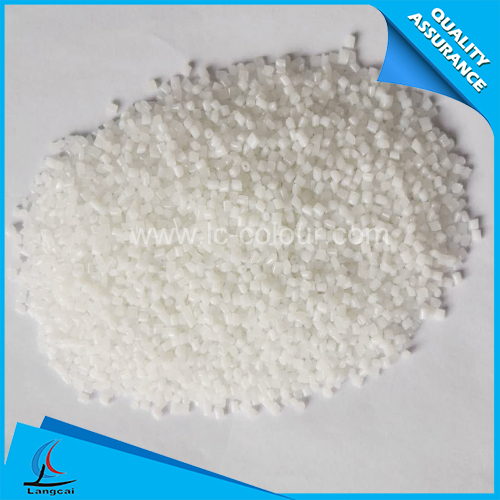
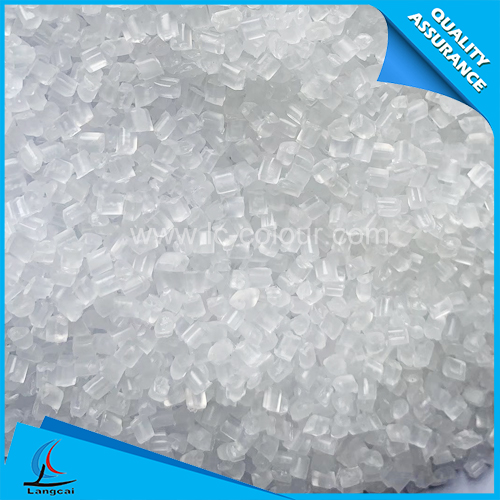
Good dispersion means that the pigments are ground extremely finely and evenly distributed within the carrier resin. You can conduct a simple comparative test: take equal amounts of masterbatch and carry out small-scale production under the same process conditions. The sample produced by high-quality masterbatch should have a smooth surface without any blemishes, and the cross-section color should be consistent, without "whiteheads" or uneven shades. This is a test of the manufacturer's grinding technology and formulation process. Only by grinding the pigments finely enough can it ensure that each filament and each injection molded part has a pure color.
II. Compatibility: Don't Let The Masterbatch Become the "Dragon's Tail" of the Production Line
Apart from color, the "compatibility" between the masterbatch and the substrate you use is equally crucial. If the compatibility is poor, it not only affects the physical properties of the product (such as brittleness and strength reduction), but also may cause carbon deposits in the die head during production, an increase in breakage rate, and an increase in the frequency of equipment shutdown for cleaning, thereby indirectly raising production costs.
When selecting a Mono Color Masterbatch, it is essential to clearly inform the supplier of your substrate type (such as PP, PE, PET, etc.) and processing method (such as spinning, injection molding, blown film). Professional suppliers will select the matching carrier resin based on the characteristics of your substrate. This way, the produced finished product not only has a bright color but also has stable physical properties, and the durability of the product will not be compromised by adding the color masterbatch. We often say "a good horse needs a good saddle", and a good masterbatch should be an "enhancement factor" for the substrate, rather than a "hindrance".
Selection suggestions:
When purchasing Mono Color Masterbatch, it is recommended to adhere to the principle of "testing samples first, then placing an order". Do not make decisions solely based on color cards. It is essential to conduct small-scale verification in the actual production environment, focusing on the fluidity during the production process, the replacement cycle of the filter screen, and the toughness of the finished product.
If you want to learn more about the products, please visit Yantai Liancai Plastic Technology Co., Ltd. (website: www.lc-colour.com) or contact the company directly for inquiries. We will provide you with professional and efficient service support!
- Batch‑to‑batch Color Deviation of Colored Polyester Yarn: Easily‑ignored
- Rapid Pressure Rise of Polyester Spinning Pack: How to Evaluate Dispersion Performance of
- Functional Masterbatch Development for Nonwovens: What Does the New Anti-Slip Technology I
- How Can Mono Color Masterbatch Adapt to Different Plastic Applications? Key Factors from C
- Plastic Processing Shifts to Multi‑variety & Small‑batch Production, Mono̴
- Peak Season for Plastic Processing in Golden Autumn|Yantai Liangcai Plastic Technology Co.
- Spinning Refinement Upgrade Drives Process‑oriented Development of Polyester fiber m
- Polyester fiber masterbatch, Special Coloring Material for Chemical Fiber Dope‑dyein
- Steady Growth in Plastic Coloration Market, Mono Color Masterbatch Expands Application wit
- Custom Mono Color Masterbatch Supplier | Yantai Langcai Plastic Technology