
- Nonwoven Fabrics
- Tailor Made Masterbatch
- Plastic Masterbatch
- Chemical Fiber Masterbatch
- Functional Masterbatch
- Machinery
- Spunbond PP Nonwoven Masterbatch
- Mono Color Masterbatch
- Liquid Color Masterbatch
- Non-woven Masterbatch
- Polyester Fiber Masterbatch
- Nylon Fiber Masterbatch
- Polypropylene Fiber Masterbatch
- Lab Nonwoven Machine
- Lab BCF Machine
- Dryer
- Filler Masterbatch
- Custom Mono Color Masterbatch Supplier | Yantai Langcai Plastic Technology
- Steady Growth in Plastic Coloration Market, Mono Color Masterbatch Expands Application with Flexible Advantages
- Preferred Raw Material for Stable Coloring, Mono Color Masterbatch for Multi-category Plastic Molding
- Refined Upgrading of Plastic Processing, Mono Color Masterbatch Evolves Toward Eco-friendly Customization
- Polyester Fiber Masterbatch Matches Spinning Production for Stable Dope Dyeing of Fibers
- Rising Demand for Fine Spinning Boosts Custom R&D of Polyester Fiber Masterbatch
- Mobile: +8613430333258
- WhatsApp: +8613430333258
- Email:wendy@ytlc-colour.com
- Address:DALAN INDUSTRIAL PARK, ZHANGXING TOWN, ZHAOYUAN CITY, SHANDONG, CHINA
In the first half of this year, in the face of the complex and changeable domestic and foreign environment, my country continued to consolidate and expand the results of epidemic prevention and control and economic and social development, implemented precise implementation, and the economy continued to recover steadily, showing a stable and stable trend of strengthening and improving stability, demonstrating the Chinese economy Strong resilience and vigorous vitality.
Affected by the rising base, my country's GDP in the first half of the year increased by 12.7% year-on-year, down 5.6 percentage points from the first quarter. Based on the two-year average growth rate, the first half of the year increased by 5.3%, 0.3% faster than the first quarter, and the quarter-on-quarter growth rate also rebounded from 0.4% in the first quarter to 1.3% in the second quarter.
From an industrial perspective, in the first half of the year, the secondary industry grew by an average of 6.1% in two years, and the tertiary industry grew by 4.9% in two years, an increase of 0.1 and 0.2 percentage points respectively over the first quarter. The growth rate of the secondary industry is faster than that of the tertiary industry, but the improvement is not as good as the latter, indicating that the epidemic prevention and control continued to improve in the second quarter, and the effect of boosting the service industry is even more obvious.
From a demand perspective, the cumulative year-on-year contribution rates of final consumption, total capital formation, and net exports to GDP in the first half of the year were 61.7%, 19.2%, and 19.1%, respectively, a decrease of 1.7 percentage points, a decrease of 5.3 percentage points and an acceleration of 6.9 percentage points from the first quarter. Percentage points, consumption continues to play the role of "ballast stone", but the contribution rate of net exports has increased.
Judging from the data in June, all economic indicators have mostly improved. From the supply side, the industrial added value in June increased by an average of 6.5% in two years, slightly lower than the 6.6% in the previous month, but the month-on-month growth rate was 0.56%, which was better than that in April and May, with full resilience. The service industry also grew at an average of 6.5% year-on-year in two years, lower than the 6.6% of last month, but it was mainly affected by the local epidemic in Guangdong, which was a short-term shock.
From the demand side, the export performance is far better than expected. Exports in US dollars in June increased by 32.2% year-on-year, better than last month's 27.9%. In June, the retail sales of consumer goods increased by an average of 4.9% in two years, better than the 4.5% in the previous month, which is consistent with the rebound in residents' disposable income growth and the low unemployment rate. In the first half of the year, fixed asset investment increased by an average of 4.4% in two years, up 0.2 percentage points from January to May, continuing the gradual recovery trend.
Among fixed asset investment, manufacturing investment rebounded from 0.6% from January to May to 2.0%, the largest improvement. In the second quarter, the utilization rate of my country's industrial capacity reached a recent high of 78.4%. The overall profitability of enterprises has improved significantly, and financial institutions have increased their support for the manufacturing industry, which is conducive to the recovery of manufacturing investment.
The growth rate of infrastructure investment dropped to 2.4% from 2.6% from January to May, which was weaker than market expectations. On June 9, the executive meeting of the State Council requested the promotion of the construction of major engineering projects during the 14th Five-Year Plan period. The scale of special bond issuance has expanded, but infrastructure investment has not rebounded as scheduled, or the state has maintained a high-pressure policy on hidden debts of local governments and The Ministry of Finance has strengthened the supervision of the use of special bonds.
Generally speaking, despite the adverse impacts such as repeated local epidemics and soaring commodities in the first half of the year, my country's economy still maintained a good momentum of development and handed in a satisfactory answer. Looking forward to the second half of the year, the global epidemic will continue to evolve, there are still many external instability and uncertainties, the domestic economy will recover unevenly, and efforts are still needed to consolidate the foundation for stable recovery and development. In addition to continuing to prevent and control the epidemic, it is recommended that macro-policies maintain continuity and stability. Fiscal policy should focus on grasping the pace of special bond issuance, speeding up the progress of fiscal expenditures, and further improving usage performance; monetary policy should be committed to maintaining reasonable and sufficient liquidity , To create a suitable monetary and financial environment for the development of the real economy.
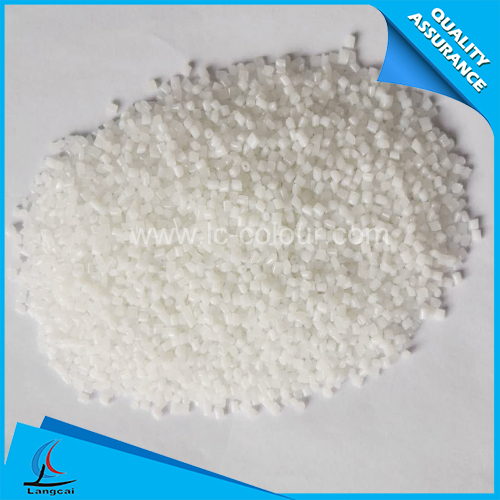
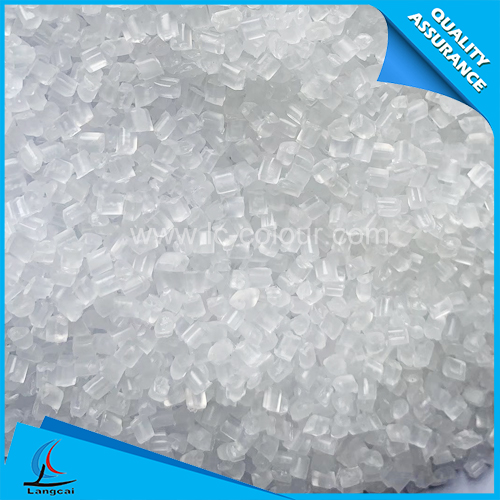
- Steady Growth in Plastic Coloration Market, Mono Color Masterbatch Expands Application wit
- Custom Mono Color Masterbatch Supplier | Yantai Langcai Plastic Technology
- Refined Upgrading of Plastic Processing, Mono Color Masterbatch Evolves Toward Eco-friendl
- Preferred Raw Material for Stable Coloring, Mono Color Masterbatch for Multi-category Plas
- Rising Demand for Fine Spinning Boosts Custom R&D of Polyester Fiber Masterbatch
- Polyester Fiber Masterbatch Matches Spinning Production for Stable Dope Dyeing of Fibers
- Rising Custom Color Demand Drives Refined & Green Upgrade of Complex Color Masterbatch Ind
- Sourcing Guide for Complex Color Masterbatch for Plastic Processors
- Mono Color Masterbatch Industry Accelerates Towards Refinement and Green Development
- How to Choose High-Quality Mono Color Masterbatch? A Practical Procurement Guide