
- Nonwoven Fabrics
- Tailor Made Masterbatch
- Plastic Masterbatch
- Chemical Fiber Masterbatch
- Functional Masterbatch
- Machinery
- Spunbond PP Nonwoven Masterbatch
- Mono Color Masterbatch
- Liquid Color Masterbatch
- Non-woven Masterbatch
- Polyester Fiber Masterbatch
- Nylon Fiber Masterbatch
- Polypropylene Fiber Masterbatch
- Lab Nonwoven Machine
- Lab BCF Machine
- Dryer
- Filler Masterbatch
- Rapid Pressure Rise of Polyester Spinning Pack: How to Evaluate Dispersion Performance of Polyester Fiber Masterbatch
- Batch‑to‑batch Color Deviation of Colored Polyester Yarn: Easily‑ignored Carrier Compatibility of Polyester Fiber Masterbatch
- How Can Mono Color Masterbatch Adapt to Different Plastic Applications? Key Factors from Color Stability to Processing Efficiency
- Functional Masterbatch Development for Nonwovens: What Does the New Anti-Slip Technology Indicate?
- Peak Season for Plastic Processing in Golden Autumn|Yantai Liangcai Plastic Technology Co., Ltd.: Mono‑color Masterbatch Supports Flexible Color‑matching Production
- Plastic Processing Shifts to Multi‑variety & Small‑batch Production, Mono‑color Masterbatch Shows Industrial Value for Flexible Color Matching
- Mobile: +8613430333258
- WhatsApp: +8613430333258
- Email:wendy@ytlc-colour.com
- Address:DALAN INDUSTRIAL PARK, ZHANGXING TOWN, ZHAOYUAN CITY, SHANDONG, CHINA
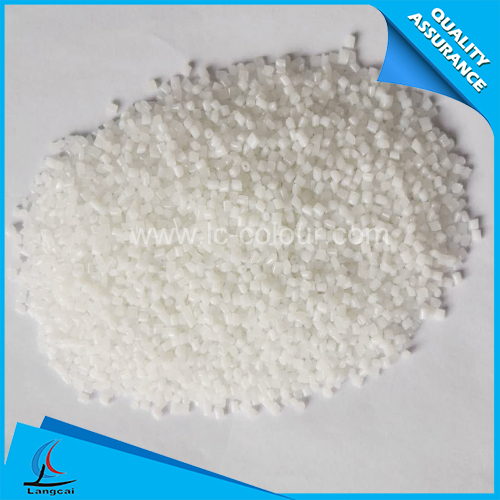
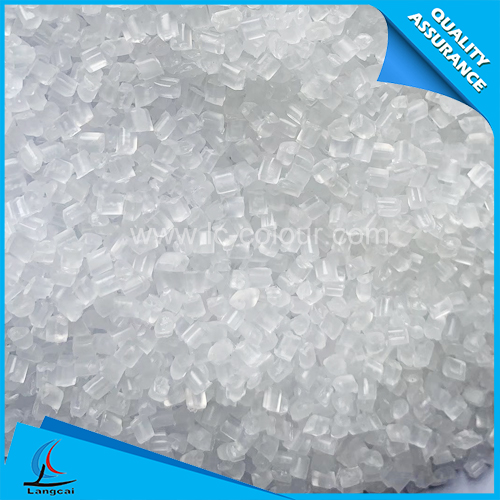
In the production process of plastic products, Mono Color Masterbatch, as a professional coloring material, plays a crucial role. This high-concentration color formulation evenly disperses pigments in the carrier resin through scientific proportioning, providing stable and consistent color performance for plastic products.
The production process of Mono Color Masterbatch is quite rigorous. Generally, it involves pre-treatment, mixing, melt extrusion and granulation. During the production, the pigments are finely ground to ensure uniform particle size distribution. Then, they are fully mixed with the carrier resin and dispersing additives. Through a twin-screw extruder, the pigments are melted and mixed together to achieve good dispersion. Finally, the product is cooled and granulated to form standardized products.
From a technical perspective, Mono Color Masterbatches have the advantages of high color concentration and good dispersion. Compared to directly using powdered pigments, monochromatic masterbatches can reduce dust pollution during the production process and improve the working environment. During plastic processing, the fluidity of monochromatic masterbatches is usually matched with the base resin, which is conducive to the uniform distribution of color in the product and avoids the occurrence of color spots or stripes.
In practical applications, the selection of Mono Color Masterbatches requires consideration of multiple factors. Depending on the type of plastic, it is necessary to match the corresponding carrier resin, such as polyolefin, polyvinyl chloride, or special monochromatic masterbatches for engineering plastics. The pigment content is also an important parameter, which is generally adjusted according to the color depth requirements of the final product. In addition, performance indicators such as heat resistance, weather resistance, and migration are also required to be evaluated based on the product's usage environment.
During the production of plastic products, the usage ratio of single-color masterbatches needs to be precisely controlled. The addition amount is usually 1% to 4%, which depends on the color depth requirements and the pigment concentration of the masterbatch itself. Before use, it should be thoroughly mixed with the base material to ensure uniform coloring. For multi-layer composite products, the compatibility between each layer of materials also needs to be considered.
Yantai Liangcai Plastic Technology Co., Ltd. is located in Zhaoyuan City, which is renowned for its abundant gold resources as the "Gold Capital of China". It is 2.5 kilometers east of the Zhaoyuan exit of the Weiwu Expressway on Provincial Road S608, 100 kilometers away from both the Yantai and Qingdao airports, with extremely convenient transportation. The company mainly produces: polyester fiber color masterbatch, nylon fiber color masterbatch, polypropylene fiber color masterbatch, plastic masterbatch (injection masterbatch, coating masterbatch, weaving filament masterbatch), chemical fiber masterbatch (polypropylene filament color masterbatch, non-woven fabric color masterbatch, polypropylene BCF color masterbatch), functional masterbatch (anti-aging masterbatch, flame retardant masterbatch, anti-static masterbatch, double anti-masterbatch, antibacterial masterbatch, hydrophilic masterbatch), and modified materials.
- Batch‑to‑batch Color Deviation of Colored Polyester Yarn: Easily‑ignored
- Rapid Pressure Rise of Polyester Spinning Pack: How to Evaluate Dispersion Performance of
- Functional Masterbatch Development for Nonwovens: What Does the New Anti-Slip Technology I
- How Can Mono Color Masterbatch Adapt to Different Plastic Applications? Key Factors from C
- Plastic Processing Shifts to Multi‑variety & Small‑batch Production, Mono̴
- Peak Season for Plastic Processing in Golden Autumn|Yantai Liangcai Plastic Technology Co.
- Spinning Refinement Upgrade Drives Process‑oriented Development of Polyester fiber m
- Polyester fiber masterbatch, Special Coloring Material for Chemical Fiber Dope‑dyein
- Steady Growth in Plastic Coloration Market, Mono Color Masterbatch Expands Application wit
- Custom Mono Color Masterbatch Supplier | Yantai Langcai Plastic Technology