
- Nonwoven Fabrics
- Tailor Made Masterbatch
- Plastic Masterbatch
- Chemical Fiber Masterbatch
- Functional Masterbatch
- Machinery
- Spunbond PP Nonwoven Masterbatch
- Mono Color Masterbatch
- Liquid Color Masterbatch
- Non-woven Masterbatch
- Polyester Fiber Masterbatch
- Nylon Fiber Masterbatch
- Polypropylene Fiber Masterbatch
- Lab Nonwoven Machine
- Lab BCF Machine
- Dryer
- Filler Masterbatch
- Rapid Pressure Rise of Polyester Spinning Pack: How to Evaluate Dispersion Performance of Polyester Fiber Masterbatch
- Batch‑to‑batch Color Deviation of Colored Polyester Yarn: Easily‑ignored Carrier Compatibility of Polyester Fiber Masterbatch
- How Can Mono Color Masterbatch Adapt to Different Plastic Applications? Key Factors from Color Stability to Processing Efficiency
- Functional Masterbatch Development for Nonwovens: What Does the New Anti-Slip Technology Indicate?
- Peak Season for Plastic Processing in Golden Autumn|Yantai Liangcai Plastic Technology Co., Ltd.: Mono‑color Masterbatch Supports Flexible Color‑matching Production
- Plastic Processing Shifts to Multi‑variety & Small‑batch Production, Mono‑color Masterbatch Shows Industrial Value for Flexible Color Matching
- Mobile: +8613430333258
- WhatsApp: +8613430333258
- Email:wendy@ytlc-colour.com
- Address:DALAN INDUSTRIAL PARK, ZHANGXING TOWN, ZHAOYUAN CITY, SHANDONG, CHINA
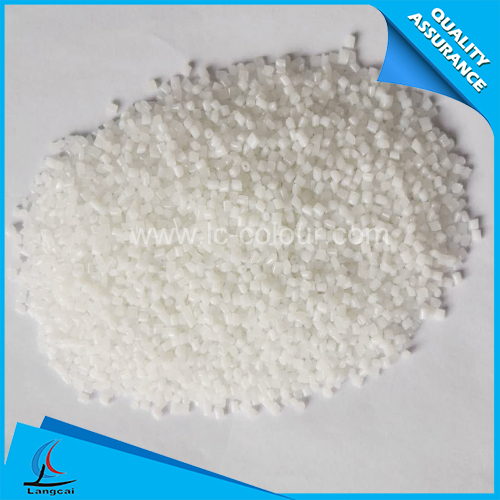
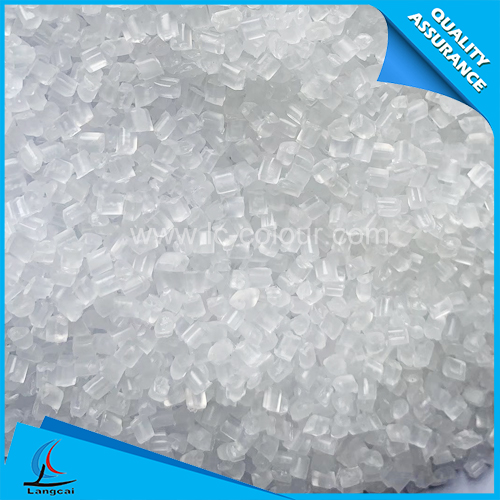
Mono Color Masterbatch is a fundamental coloring material in the plastic processing industry, referring to a type of color masterbatch that contains only a single pigment or dye. In industrial production, it is among the common masterbatches, along with general masterbatches and functional masterbatches, and undertakes the core task of imparting color to plastic products. Monochrome masterbatches are usually carried by resin and uniformly disperse high-concentration pigments within them to form granular colorants, making it convenient for downstream manufacturers to directly use them.
Composition Structure and Dispersion Principle
From the perspective of composition, a Mono Color Masterbatch consists of three basic components. The carrier resin serves as the medium for carrying the pigments, and usually, materials with good compatibility with the colored resin, such as polyethylene or polypropylene carriers, are selected. The pigment component determines the color of the masterbatch, covering two major systems: inorganic pigments and organic pigments. Inorganic pigments have outstanding weather resistance, while organic pigments have higher color vividness. The function of the dispersion aid is to reduce the tendency of pigment agglomeration and ensure the uniform distribution of the pigments in the carrier.
In the production process, Mono Color Masterbatches are made through compounding, extrusion or kneading techniques. The pigments and carriers are fully mixed under high-temperature shear action, and after being melted, extruded and granulated, they form regular particles. High-quality dispersion processes can control the particle size of the pigments within a smaller range, which has a direct impact on the surface finish of subsequent injection or blow molding products.
The core features of single-color masterbatch
Mono Color Masterbatch uses a single-color formulation, with a clear and stable color. Compared to multi-color blending or on-site color matching, the color difference between batches of single-color masterbatch is smaller, making it easier for manufacturing enterprises to manage inventory and trace quality. In terms of addition method, operators only need to mix the masterbatch with the raw materials in the set proportion, without coming into contact with powdered pigments, which reduces dust飞扬 and improves the working environment in the workshop.
In terms of cost control, the pigment concentration of Mono Color Masterbatch can be adjusted. The conventional concentration range covers an interval from 20% to 60%. Users can adjust the addition ratio according to the requirements of the product's wall thickness, transparency and covering power. For products with a thinner wall, appropriately increasing the addition ratio can ensure color saturation; for dark-colored products, the conventional ratio can meet the color display requirements.
- Batch‑to‑batch Color Deviation of Colored Polyester Yarn: Easily‑ignored
- Rapid Pressure Rise of Polyester Spinning Pack: How to Evaluate Dispersion Performance of
- Functional Masterbatch Development for Nonwovens: What Does the New Anti-Slip Technology I
- How Can Mono Color Masterbatch Adapt to Different Plastic Applications? Key Factors from C
- Plastic Processing Shifts to Multi‑variety & Small‑batch Production, Mono̴
- Peak Season for Plastic Processing in Golden Autumn|Yantai Liangcai Plastic Technology Co.
- Spinning Refinement Upgrade Drives Process‑oriented Development of Polyester fiber m
- Polyester fiber masterbatch, Special Coloring Material for Chemical Fiber Dope‑dyein
- Steady Growth in Plastic Coloration Market, Mono Color Masterbatch Expands Application wit
- Custom Mono Color Masterbatch Supplier | Yantai Langcai Plastic Technology