
- Nonwoven Fabrics
- Tailor Made Masterbatch
- Plastic Masterbatch
- Chemical Fiber Masterbatch
- Functional Masterbatch
- Machinery
- Spunbond PP Nonwoven Masterbatch
- Mono Color Masterbatch
- Liquid Color Masterbatch
- Non-woven Masterbatch
- Polyester Fiber Masterbatch
- Nylon Fiber Masterbatch
- Polypropylene Fiber Masterbatch
- Lab Nonwoven Machine
- Lab BCF Machine
- Dryer
- Filler Masterbatch
- Rapid Pressure Rise of Polyester Spinning Pack: How to Evaluate Dispersion Performance of Polyester Fiber Masterbatch
- Batch‑to‑batch Color Deviation of Colored Polyester Yarn: Easily‑ignored Carrier Compatibility of Polyester Fiber Masterbatch
- How Can Mono Color Masterbatch Adapt to Different Plastic Applications? Key Factors from Color Stability to Processing Efficiency
- Functional Masterbatch Development for Nonwovens: What Does the New Anti-Slip Technology Indicate?
- Peak Season for Plastic Processing in Golden Autumn|Yantai Liangcai Plastic Technology Co., Ltd.: Mono‑color Masterbatch Supports Flexible Color‑matching Production
- Plastic Processing Shifts to Multi‑variety & Small‑batch Production, Mono‑color Masterbatch Shows Industrial Value for Flexible Color Matching
- Mobile: +8613430333258
- WhatsApp: +8613430333258
- Email:wendy@ytlc-colour.com
- Address:DALAN INDUSTRIAL PARK, ZHANGXING TOWN, ZHAOYUAN CITY, SHANDONG, CHINA
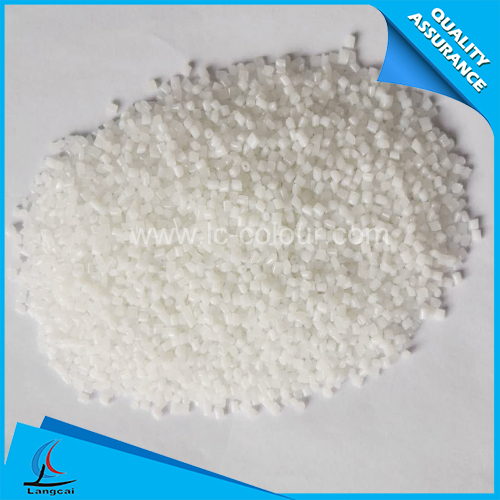
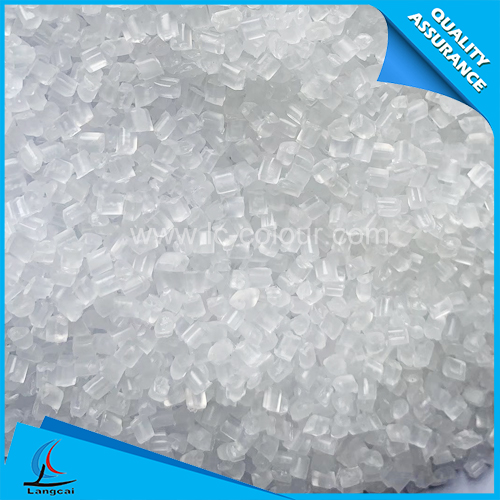
Mono Color Masterbatch, as a common coloring material in the plastic industry, plays a stable and significant role in the production of various plastic products. These products are made through professional processes, where pigments are evenly dispersed in the carrier resin to form high-concentration coloring particles, providing a convenient coloring solution for subsequent plastic processing.
The production of Mono Color Masterbatch typically involves multiple steps. In the raw material preparation stage, suitable pigments, dispersants, and carrier resins need to be selected. The choice of pigments determines the color and durability of the masterbatch, while the dispersant helps to evenly distribute the pigments, and the carrier resin must have good compatibility with the target plastic substrate. During the pre-treatment process, the pigments often require surface treatment to improve their dispersibility. In the mixing process, various raw materials are added in specific proportions to a high-speed mixer for thorough stirring. The key step is extrusion granulation, where the mixture is melted and mixed together in a twin-screw extruder under shear force, achieving fine dispersion of the pigments. Finally, the particles are formed through underwater granulation or strip granulation.
In terms of performance characteristics, the Mono Color Masterbatch demonstrates several advantages. It has a high coloring efficiency, and a small amount of addition can achieve the desired color effect. Since the pigments are pre-dispersed, it can reduce dust pollution during plastic product production and improve the production environment. The color stability between batches is good, which helps to maintain the consistency of product appearance. Compared with directly using pigment powder, the metering of the single-color masterbatch is more accurate and the operation is simpler.
The application scope of Monochromatic masterbatches covers multiple fields. In the production of packaging materials, they are used for coloring food containers and daily chemical packaging. The exteriors of household appliances and electronic products also commonly use single-color masterbatches for appearance coloring. Interior and exterior components in the automotive industry also require such coloring materials. Moreover, single-color masterbatches are applied in fields such as building materials pipes, daily-use products, and children's toys.
With the increasing demands for plastic products in the market, the Mono Color Masterbatch technology has also been continuously developing. Some enterprises have begun to develop product varieties with high concentration and low migration to meet the strict requirements of food contact materials. The application proportion of environmentally friendly and heavy-metal-free pigments is gradually increasing to meet the development trend of green manufacturing. Special single-color masterbatch varieties for specific engineering plastics are also constantly being enriched.
When choosing monochromatic masterbatch products, several key factors need to be considered. The performance indicators such as the light resistance, heat resistance, and migration property of the pigment itself should meet the requirements of the final product's usage environment. The compatibility between the masterbatch and the base resin directly affects the surface quality and mechanical properties of the product. Different processing methods also have corresponding requirements for the dispersion of the masterbatch.
The continuous development of the single-color masterbatch industry is driving the plastic coloring technology towards a more environmentally friendly, more efficient and more specialized direction, providing reliable support for the appearance and quality improvement of plastic products.
- Batch‑to‑batch Color Deviation of Colored Polyester Yarn: Easily‑ignored
- Rapid Pressure Rise of Polyester Spinning Pack: How to Evaluate Dispersion Performance of
- Functional Masterbatch Development for Nonwovens: What Does the New Anti-Slip Technology I
- How Can Mono Color Masterbatch Adapt to Different Plastic Applications? Key Factors from C
- Plastic Processing Shifts to Multi‑variety & Small‑batch Production, Mono̴
- Peak Season for Plastic Processing in Golden Autumn|Yantai Liangcai Plastic Technology Co.
- Spinning Refinement Upgrade Drives Process‑oriented Development of Polyester fiber m
- Polyester fiber masterbatch, Special Coloring Material for Chemical Fiber Dope‑dyein
- Steady Growth in Plastic Coloration Market, Mono Color Masterbatch Expands Application wit
- Custom Mono Color Masterbatch Supplier | Yantai Langcai Plastic Technology