
- Nonwoven Fabrics
- Tailor Made Masterbatch
- Plastic Masterbatch
- Chemical Fiber Masterbatch
- Functional Masterbatch
- Machinery
- Spunbond PP Nonwoven Masterbatch
- Mono Color Masterbatch
- Liquid Color Masterbatch
- Non-woven Masterbatch
- Polyester Fiber Masterbatch
- Nylon Fiber Masterbatch
- Polypropylene Fiber Masterbatch
- Lab Nonwoven Machine
- Lab BCF Machine
- Dryer
- Filler Masterbatch
- Rapid Pressure Rise of Polyester Spinning Pack: How to Evaluate Dispersion Performance of Polyester Fiber Masterbatch
- Batch‑to‑batch Color Deviation of Colored Polyester Yarn: Easily‑ignored Carrier Compatibility of Polyester Fiber Masterbatch
- How Can Mono Color Masterbatch Adapt to Different Plastic Applications? Key Factors from Color Stability to Processing Efficiency
- Functional Masterbatch Development for Nonwovens: What Does the New Anti-Slip Technology Indicate?
- Peak Season for Plastic Processing in Golden Autumn|Yantai Liangcai Plastic Technology Co., Ltd.: Mono‑color Masterbatch Supports Flexible Color‑matching Production
- Plastic Processing Shifts to Multi‑variety & Small‑batch Production, Mono‑color Masterbatch Shows Industrial Value for Flexible Color Matching
- Mobile: +8613430333258
- WhatsApp: +8613430333258
- Email:wendy@ytlc-colour.com
- Address:DALAN INDUSTRIAL PARK, ZHANGXING TOWN, ZHAOYUAN CITY, SHANDONG, CHINA
What is a Complex masterbatch?
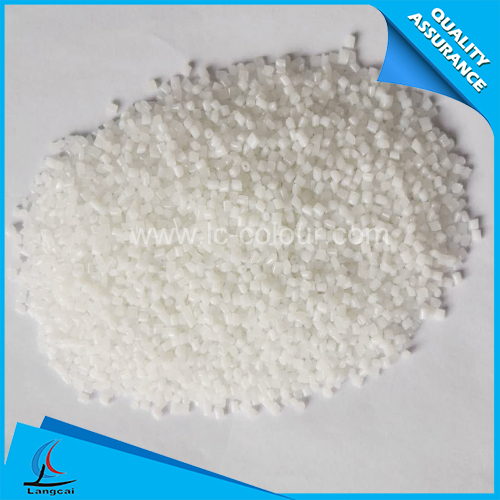
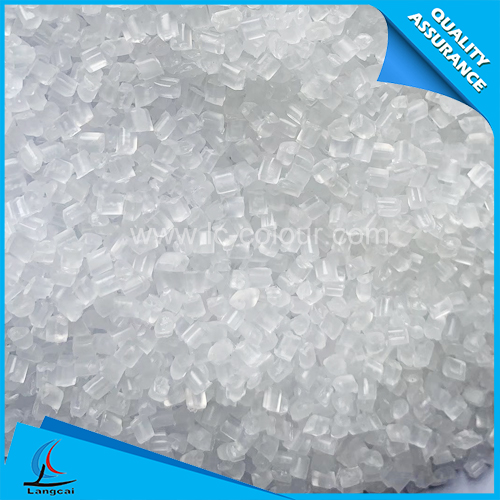
Complex masterbatch, also known as color masterbatch, is a granular colorant made from an excessive amount of chemical pigments, carrier resins and various dispersants through precise processes such as high-temperature mixing, extrusion and pelletizing. Unlike single-color masterbatches, multi-color masterbatches are produced by scientifically blending multiple base pigments in specific proportions to directly present the desired final color (such as wood grain color, marble texture or various custom tones). This means that plastic product manufacturers no longer need to carry out complex color-matching operations, achieving the convenience of "color upon use".
The outstanding advantages of Complex masterbatches
Uniform coloring and stable quality
The compound masterbatch has excellent dispersibility. During the production process of plastic products, it can be fully and evenly mixed with the base resin, effectively avoiding color differences, color streaks and other defects, ensuring the color consistency of each batch of products, and significantly improving the appearance quality of the products.
Environmentally friendly and clean, enhancing efficiency
The coloring process using Complex masterbatches is cleaner and more environmentally friendly compared to traditional powder pigments, with no dust flying around, improving the working environment and ensuring the health of employees. Meanwhile, it has a high degree of automation, simplifies the production process and significantly improves the production efficiency of plastic products.
Rich in color and widely applied
With its flexible color-matching ability, compound color masterbatches can provide almost any color you can imagine. Therefore, its application is extremely extensive, covering various processing techniques such as injection molding, blown film, extrusion, and spinning, making it an ideal choice for plastic coloring.
- Batch‑to‑batch Color Deviation of Colored Polyester Yarn: Easily‑ignored
- Rapid Pressure Rise of Polyester Spinning Pack: How to Evaluate Dispersion Performance of
- Functional Masterbatch Development for Nonwovens: What Does the New Anti-Slip Technology I
- How Can Mono Color Masterbatch Adapt to Different Plastic Applications? Key Factors from C
- Plastic Processing Shifts to Multi‑variety & Small‑batch Production, Mono̴
- Peak Season for Plastic Processing in Golden Autumn|Yantai Liangcai Plastic Technology Co.
- Spinning Refinement Upgrade Drives Process‑oriented Development of Polyester fiber m
- Polyester fiber masterbatch, Special Coloring Material for Chemical Fiber Dope‑dyein
- Steady Growth in Plastic Coloration Market, Mono Color Masterbatch Expands Application wit
- Custom Mono Color Masterbatch Supplier | Yantai Langcai Plastic Technology