
- Nonwoven Fabrics
- Tailor Made Masterbatch
- Plastic Masterbatch
- Chemical Fiber Masterbatch
- Functional Masterbatch
- Machinery
- Spunbond PP Nonwoven Masterbatch
- Mono Color Masterbatch
- Liquid Color Masterbatch
- Non-woven Masterbatch
- Polyester Fiber Masterbatch
- Nylon Fiber Masterbatch
- Polypropylene Fiber Masterbatch
- Lab Nonwoven Machine
- Lab BCF Machine
- Dryer
- Filler Masterbatch
- Rapid Pressure Rise of Polyester Spinning Pack: How to Evaluate Dispersion Performance of Polyester Fiber Masterbatch
- Batch‑to‑batch Color Deviation of Colored Polyester Yarn: Easily‑ignored Carrier Compatibility of Polyester Fiber Masterbatch
- How Can Mono Color Masterbatch Adapt to Different Plastic Applications? Key Factors from Color Stability to Processing Efficiency
- Functional Masterbatch Development for Nonwovens: What Does the New Anti-Slip Technology Indicate?
- Peak Season for Plastic Processing in Golden Autumn|Yantai Liangcai Plastic Technology Co., Ltd.: Mono‑color Masterbatch Supports Flexible Color‑matching Production
- Plastic Processing Shifts to Multi‑variety & Small‑batch Production, Mono‑color Masterbatch Shows Industrial Value for Flexible Color Matching
- Mobile: +8613430333258
- WhatsApp: +8613430333258
- Email:wendy@ytlc-colour.com
- Address:DALAN INDUSTRIAL PARK, ZHANGXING TOWN, ZHAOYUAN CITY, SHANDONG, CHINA
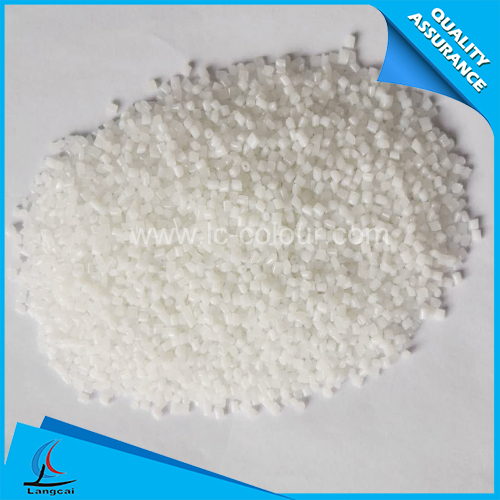
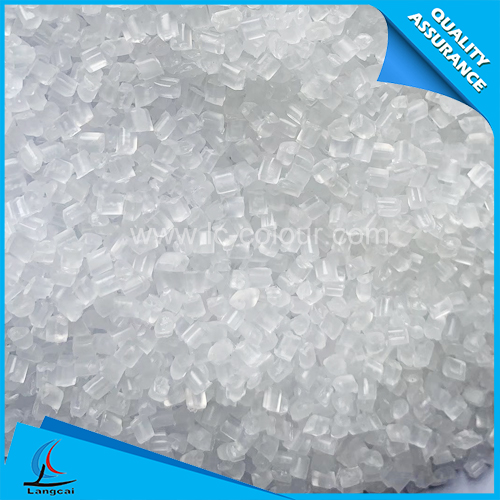
Color masterbatch is a plastic colorant made by mixing and dispersing a high proportion of pigments, additives and thermoplastic resin, namely: pigment + carrier + additive = color masterbatch. The advantages of plastic masterbatch are as follows:
1. Make the pigment have better dispersibility in the product
In the production process of color masterbatch, the pigment must be refined to improve the dispersibility and tinting strength of the pigment. The carrier of the special color masterbatch is the same as the plastic of the product, and it has good matching. After heating and melting, the pigment particles can be well dispersed in the product plastic.
2. Conducive to maintaining the chemical stability of the pigment
If the pigment is used directly, the pigment will absorb water and oxidize due to direct contact with the air during storage and use. After the color masterbatch is made, the resin carrier separates the pigment from the air and moisture, which can make the quality of the pigment long-term change.
3. Ensure the stability of the product color
The masterbatch particles are similar to the resin particles, which are more convenient and accurate in metering. They will not stick to the container during mixing, and the mixing with the resin is more uniform. Therefore, the stability of the addition amount can be ensured to ensure the stability of the product color.
4. Protect the health of operators
Pigments are generally powdery and easy to fly when added and mixed. Laizhou Caizhiyuan Pigment Technology Co., Ltd. specializes in production: Permanent Red F3RK, Permanent Red F5RK, Light Fast Brilliant Red 2BP, Lithol Magenta 4BP, Permanent Yellow 2G , Permanent Yellow HR, Permanent Yellow HGR, Permanent Orange G, Phthalocyanine Blue BGS, Phthalocyanine Green G, Permanent Violet RL and other organic pigments. After being inhaled by the human body, it will affect the health of the operator.
5. Keep the environment clean
6. Easy to use
Because of the above-mentioned advantages, masterbatch coloring is the most commonly used plastic coloring method nowadays.
- Batch‑to‑batch Color Deviation of Colored Polyester Yarn: Easily‑ignored
- Rapid Pressure Rise of Polyester Spinning Pack: How to Evaluate Dispersion Performance of
- Functional Masterbatch Development for Nonwovens: What Does the New Anti-Slip Technology I
- How Can Mono Color Masterbatch Adapt to Different Plastic Applications? Key Factors from C
- Plastic Processing Shifts to Multi‑variety & Small‑batch Production, Mono̴
- Peak Season for Plastic Processing in Golden Autumn|Yantai Liangcai Plastic Technology Co.
- Spinning Refinement Upgrade Drives Process‑oriented Development of Polyester fiber m
- Polyester fiber masterbatch, Special Coloring Material for Chemical Fiber Dope‑dyein
- Steady Growth in Plastic Coloration Market, Mono Color Masterbatch Expands Application wit
- Custom Mono Color Masterbatch Supplier | Yantai Langcai Plastic Technology