
- Nonwoven Fabrics
- Tailor Made Masterbatch
- Plastic Masterbatch
- Chemical Fiber Masterbatch
- Functional Masterbatch
- Machinery
- Spunbond PP Nonwoven Masterbatch
- Mono Color Masterbatch
- Liquid Color Masterbatch
- Non-woven Masterbatch
- Polyester Fiber Masterbatch
- Nylon Fiber Masterbatch
- Polypropylene Fiber Masterbatch
- Lab Nonwoven Machine
- Lab BCF Machine
- Dryer
- Filler Masterbatch
- Rapid Pressure Rise of Polyester Spinning Pack: How to Evaluate Dispersion Performance of Polyester Fiber Masterbatch
- Batch‑to‑batch Color Deviation of Colored Polyester Yarn: Easily‑ignored Carrier Compatibility of Polyester Fiber Masterbatch
- How Can Mono Color Masterbatch Adapt to Different Plastic Applications? Key Factors from Color Stability to Processing Efficiency
- Functional Masterbatch Development for Nonwovens: What Does the New Anti-Slip Technology Indicate?
- Peak Season for Plastic Processing in Golden Autumn|Yantai Liangcai Plastic Technology Co., Ltd.: Mono‑color Masterbatch Supports Flexible Color‑matching Production
- Plastic Processing Shifts to Multi‑variety & Small‑batch Production, Mono‑color Masterbatch Shows Industrial Value for Flexible Color Matching
- Mobile: +8613430333258
- WhatsApp: +8613430333258
- Email:wendy@ytlc-colour.com
- Address:DALAN INDUSTRIAL PARK, ZHANGXING TOWN, ZHAOYUAN CITY, SHANDONG, CHINA
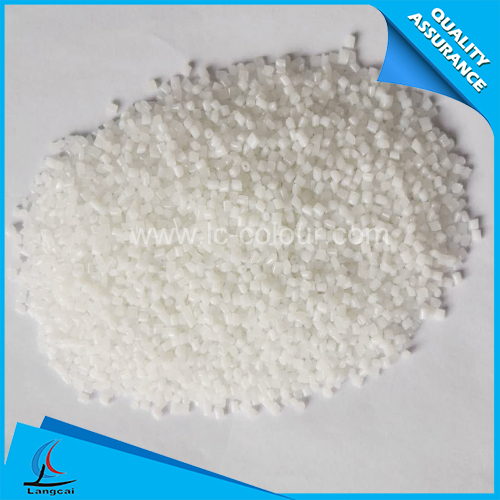
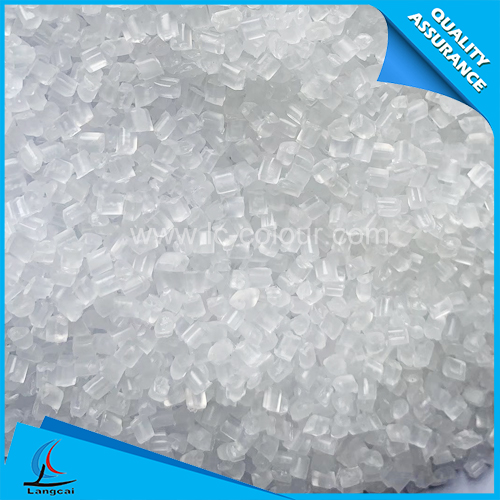
At present, most of the chemical fibers (chemical filaments) are inseparable from the chemical fiber masterbatch in the production process. These masterbatch particles have a large body and the chemical fiber filaments woven by them are more environmentally friendly and more diversified. The trend of the times.
At a time when the “low-carbon economy” and energy conservation and emission reduction have attracted the attention of the world, the chemical fiber textile industry is looking for a cleaner dyeing method to solve the environmental problems of the dyeing process for a long time. At present, there are two ways to color the fiber: post-spinning and pre-spinning. Pre-spinning coloring using the masterbatch method is recognized as an environmentally friendly coloring method.
The positive masterbatch is a mixture of polyester or nylon 6 and pigment (or a dye melted in a polyester or nylon melt). The content of the dye in the carrier is as high as 30% to 40% by weight. The masterbatch is produced by mixing the molten polyester or nylon with a pigment or dye in a predetermined ratio with a special screw and selling it in sections. The principle of pigment selection is: good compatibility with polyester or nylon 6, high temperature resistance of about 300 ° C, good dispersibility in the carrier and other firmness for fiber end use (such as light resistance, washability, abrasion resistance) .
The development prospects of chemical fiber masterbatch are broad. With the adjustment of national industrial policies and the continuous strengthening of policy support for energy conservation and emission reduction enterprises, masterbatch coloring is gradually occupying the market share of traditional dyeing processes. Taking polyester, which accounts for more than 80% of China's chemical fiber production, for example, the demand for masterbatch in the polyester industry is currently about 250,000 tons, and it is still growing at a rate of 30% per year. However, the total output of polyester fiber masterbatch in China was only about 30,000 tons in 2007, and most of them are medium and low-grade conventional products. Demand for fine denier, ultrafine denier masterbatch and functional masterbatch is urgent.
Specifically, the above is the general summary. The masterbatch fiber is pre-spinning by the masterbatch method, and is a fiber product produced by the recognized environmental coloring method.
Chemical fiber masterbatches are also developing in a multi-functional and diversified direction, responding to slogans such as “sustainable development” and “green economy”. Let us witness the future contribution of chemical fiber masterbatch to the industry.
- Batch‑to‑batch Color Deviation of Colored Polyester Yarn: Easily‑ignored
- Rapid Pressure Rise of Polyester Spinning Pack: How to Evaluate Dispersion Performance of
- Functional Masterbatch Development for Nonwovens: What Does the New Anti-Slip Technology I
- How Can Mono Color Masterbatch Adapt to Different Plastic Applications? Key Factors from C
- Plastic Processing Shifts to Multi‑variety & Small‑batch Production, Mono̴
- Peak Season for Plastic Processing in Golden Autumn|Yantai Liangcai Plastic Technology Co.
- Spinning Refinement Upgrade Drives Process‑oriented Development of Polyester fiber m
- Polyester fiber masterbatch, Special Coloring Material for Chemical Fiber Dope‑dyein
- Steady Growth in Plastic Coloration Market, Mono Color Masterbatch Expands Application wit
- Custom Mono Color Masterbatch Supplier | Yantai Langcai Plastic Technology