
- Nonwoven Fabrics
- Tailor Made Masterbatch
- Plastic Masterbatch
- Chemical Fiber Masterbatch
- Functional Masterbatch
- Machinery
- Spunbond PP Nonwoven Masterbatch
- Mono Color Masterbatch
- Liquid Color Masterbatch
- Non-woven Masterbatch
- Polyester Fiber Masterbatch
- Nylon Fiber Masterbatch
- Polypropylene Fiber Masterbatch
- Lab Nonwoven Machine
- Lab BCF Machine
- Dryer
- Filler Masterbatch
- Rapid Pressure Rise of Polyester Spinning Pack: How to Evaluate Dispersion Performance of Polyester Fiber Masterbatch
- Batch‑to‑batch Color Deviation of Colored Polyester Yarn: Easily‑ignored Carrier Compatibility of Polyester Fiber Masterbatch
- How Can Mono Color Masterbatch Adapt to Different Plastic Applications? Key Factors from Color Stability to Processing Efficiency
- Functional Masterbatch Development for Nonwovens: What Does the New Anti-Slip Technology Indicate?
- Peak Season for Plastic Processing in Golden Autumn|Yantai Liangcai Plastic Technology Co., Ltd.: Mono‑color Masterbatch Supports Flexible Color‑matching Production
- Plastic Processing Shifts to Multi‑variety & Small‑batch Production, Mono‑color Masterbatch Shows Industrial Value for Flexible Color Matching
- Mobile: +8613430333258
- WhatsApp: +8613430333258
- Email:wendy@ytlc-colour.com
- Address:DALAN INDUSTRIAL PARK, ZHANGXING TOWN, ZHAOYUAN CITY, SHANDONG, CHINA
Not all pigments are suitable for plastic masterbatch, pigments for plastic masterbatch, different factors such as processing technology, plastic products, etc., the performance requirements for pigments are different, in general, have the following Performance requirements:
Color
The coloring force of the pigment refers to the amount of pigment required for a certain color article, expressed in the percentage of standard samples. The coloring force of the pigment is not only related to its nature, but also related to the degree of dispersion of the pigment, the degree of dispersion is mainly the degree of refinement of the pigment, the larger the dispersion, the stronger the color force, but there is a saturation value.
2. Heat resistance
Heat resistance refers to its degree of change in color or performance of the pigment at the temperature of the processed and used. It is necessary to consider its heatstream time when considering the heat resistance of the pigment. Due to the different processing methods, the processing method is different, during use, during use, the use is different, and the heat is different, the higher the temperature, the shorter heat treatment.
3. Mobility
Mounting resistance of pigments refers to a long-term contact with other solid, liquid, and gas state substances or in a certain particular environment. It is possible to physically and chemically in the above substance. It is manifested as a pigment to migrate from plastic to the article. Free surface, or migrated to adjacent plastic or solvents.
4. Nature and weather resistance
Plastic products require good light resistance and weather resistance due to long-term use of outdoor use. Some pigments have different degrees of variations under illumination of light. Weather resistance refers to the color stability of the pigment under a variety of natural conditions. Black mother is very much in use, which is specially focused on migration and weather resistance.
Chemical resistance
Industrial plastic products are often used to store chemicals and use as transport acids, bases, etc., and thus considering the resistance and alkali resistance of pigments.
Chemical drugs such as acid, alkali should also include resin decomposition products, other additives in the article, and detergents, bleaching agents, and the like in the environment.
6. Toxicity
Plastic products used in daily life are increasingly paying more and more attention to the toxicity of color plastics.
7. Mixing
When the plastic product is colored, two of the above pigment colors are often used, so it is necessary to understand the mixing properties between them, and it is also necessary to understand whether the color master is chemically reacted with additives in plastics.
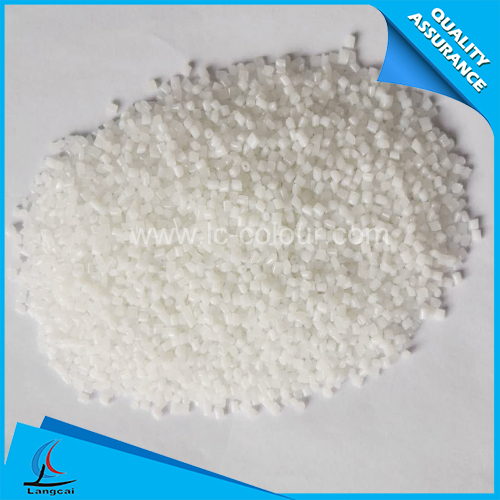
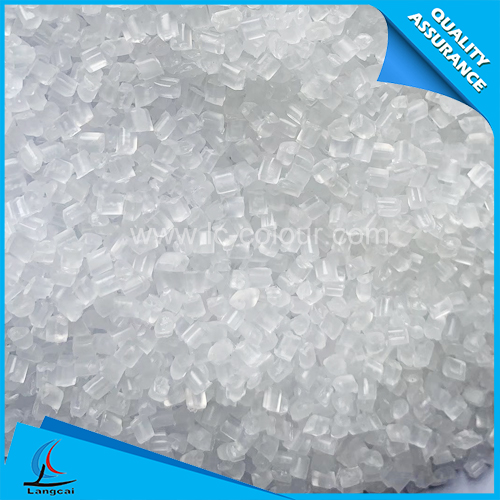
The plastic masterbatch from a high proportion of pigment or additive with a thermoplastic resin, a plastic colorant obtained well, and the selected resin has good wetting and dispersion, and has good phase with the coloring material has a good phase. Capacity. That is: the pigment + vector + additive = color masterbatch.
Only the requirements of plastic masterbatch can be achieved only in accordance with 7 indicators above.
- Batch‑to‑batch Color Deviation of Colored Polyester Yarn: Easily‑ignored
- Rapid Pressure Rise of Polyester Spinning Pack: How to Evaluate Dispersion Performance of
- Functional Masterbatch Development for Nonwovens: What Does the New Anti-Slip Technology I
- How Can Mono Color Masterbatch Adapt to Different Plastic Applications? Key Factors from C
- Plastic Processing Shifts to Multi‑variety & Small‑batch Production, Mono̴
- Peak Season for Plastic Processing in Golden Autumn|Yantai Liangcai Plastic Technology Co.
- Spinning Refinement Upgrade Drives Process‑oriented Development of Polyester fiber m
- Polyester fiber masterbatch, Special Coloring Material for Chemical Fiber Dope‑dyein
- Steady Growth in Plastic Coloration Market, Mono Color Masterbatch Expands Application wit
- Custom Mono Color Masterbatch Supplier | Yantai Langcai Plastic Technology