
- Nonwoven Fabrics
- Tailor Made Masterbatch
- Plastic Masterbatch
- Chemical Fiber Masterbatch
- Functional Masterbatch
- Machinery
- Spunbond PP Nonwoven Masterbatch
- Mono Color Masterbatch
- Liquid Color Masterbatch
- Non-woven Masterbatch
- Polyester Fiber Masterbatch
- Nylon Fiber Masterbatch
- Polypropylene Fiber Masterbatch
- Lab Nonwoven Machine
- Lab BCF Machine
- Dryer
- Filler Masterbatch
- Rapid Pressure Rise of Polyester Spinning Pack: How to Evaluate Dispersion Performance of Polyester Fiber Masterbatch
- Batch‑to‑batch Color Deviation of Colored Polyester Yarn: Easily‑ignored Carrier Compatibility of Polyester Fiber Masterbatch
- How Can Mono Color Masterbatch Adapt to Different Plastic Applications? Key Factors from Color Stability to Processing Efficiency
- Functional Masterbatch Development for Nonwovens: What Does the New Anti-Slip Technology Indicate?
- Peak Season for Plastic Processing in Golden Autumn|Yantai Liangcai Plastic Technology Co., Ltd.: Mono‑color Masterbatch Supports Flexible Color‑matching Production
- Plastic Processing Shifts to Multi‑variety & Small‑batch Production, Mono‑color Masterbatch Shows Industrial Value for Flexible Color Matching
- Mobile: +8613430333258
- WhatsApp: +8613430333258
- Email:wendy@ytlc-colour.com
- Address:DALAN INDUSTRIAL PARK, ZHANGXING TOWN, ZHAOYUAN CITY, SHANDONG, CHINA
What is the difference between single-color masterbatch and multi-color masterbatch?
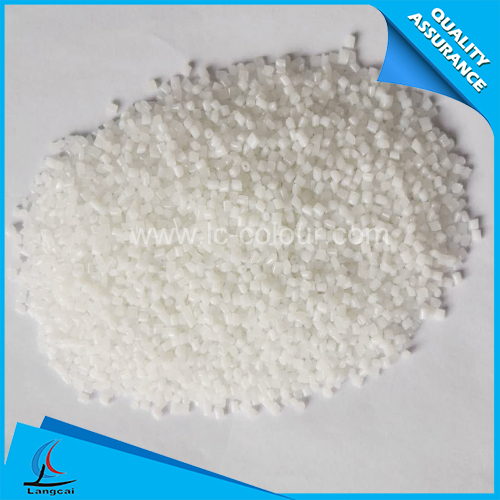
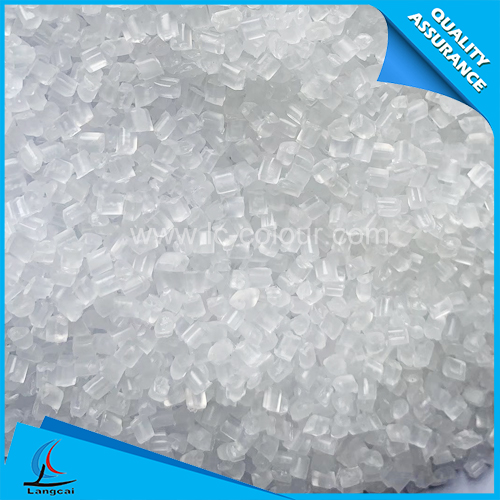
Monochromatic masterbatch is a masterbatch made based on the three primary colors of red, yellow and blue; multi-color masterbatch is a color masterbatch made according to the special requirements of customers.
The masterbatch is mainly composed of the following parts:
(1) Carrier
The carrier resin is a substance that supports the pigment and uniformly disperses the pigment under the action of a dispersant and a processing modifier. Some imported PVC pellets use special polyester as the carrier. Generally, suspension polyvinyl chloride SG-6 or SG-7 with better fluidity can also be used as the carrier.
(2) Plasticizer
Polar PVC has large intermolecular attraction, high viscosity, and is difficult to melt and flow. Therefore, it is necessary to add a plasticizer to reduce the intermolecular force of the resin, thereby reducing the melt flow temperature and melt viscosity of the polyvinyl chloride resin. Considering the required softness and hardness of the masterbatch, one or more plasticizers in different parts can be added as needed. Plasticizers generally use dioctyl phthalate (DOP) with good versatility as the main plasticizer, and epoxy compounds with low volatility and stabilizers as auxiliary plasticizers.
(3) Heat stabilizer
Polyvinyl chloride is easily decomposed when heated, and HCl gas escapes, so a heat stabilizer must be added. Because the color masterbatch is prepared by a twin-screw extruder, the requirements for the thermal stability of the resin system are more stringent.
(4) Processing modifier
As a color masterbatch, the ideal fluidity should be that its fluidity is better than that of the original color, that is, the viscosity of the masterbatch should be lower than that of the original color, so that it can be uniformly colored. The addition of high-concentration pigments greatly increases the viscosity of polyvinyl chloride, especially when carbon black that is difficult to disperse and has a large oil absorption is added, even if a very high amount of plasticizer is added, the viscosity of the system is still very high. By choosing a suitable processing modifier, the melt viscosity of the system can be effectively reduced, which is more conducive to the dispersion of the pigments and can ensure continuous processing stability.
(5) Lubricant
In the polyvinyl chloride resin, internal and external lubricants must be added, and the internal and external lubricants should be balanced to reduce the maximum torque when the resin is melted, and to ensure the brightness of the product appearance.
(6) Pigment
3. Ensure that the stable color of the product is similar to the resin particles. It is more convenient and accurate in measurement. It will not stick to the container during mixing. The mixing with the resin is also more uniform. Therefore, the stability of the addition amount can be ensured. Stability of product color.
4. Protect the health of the operator. The pigment is generally in powder form, which is easy to fly when added and mixed. After being inhaled by the human body, it will affect the health of the operator.
5. Keep the environment clean.
- Batch‑to‑batch Color Deviation of Colored Polyester Yarn: Easily‑ignored
- Rapid Pressure Rise of Polyester Spinning Pack: How to Evaluate Dispersion Performance of
- Functional Masterbatch Development for Nonwovens: What Does the New Anti-Slip Technology I
- How Can Mono Color Masterbatch Adapt to Different Plastic Applications? Key Factors from C
- Plastic Processing Shifts to Multi‑variety & Small‑batch Production, Mono̴
- Peak Season for Plastic Processing in Golden Autumn|Yantai Liangcai Plastic Technology Co.
- Spinning Refinement Upgrade Drives Process‑oriented Development of Polyester fiber m
- Polyester fiber masterbatch, Special Coloring Material for Chemical Fiber Dope‑dyein
- Steady Growth in Plastic Coloration Market, Mono Color Masterbatch Expands Application wit
- Custom Mono Color Masterbatch Supplier | Yantai Langcai Plastic Technology