
- Nonwoven Fabrics
- Tailor Made Masterbatch
- Plastic Masterbatch
- Chemical Fiber Masterbatch
- Functional Masterbatch
- Machinery
- Spunbond PP Nonwoven Masterbatch
- Mono Color Masterbatch
- Liquid Color Masterbatch
- Non-woven Masterbatch
- Polyester Fiber Masterbatch
- Nylon Fiber Masterbatch
- Polypropylene Fiber Masterbatch
- Lab Nonwoven Machine
- Lab BCF Machine
- Dryer
- Filler Masterbatch
- Rapid Pressure Rise of Polyester Spinning Pack: How to Evaluate Dispersion Performance of Polyester Fiber Masterbatch
- Batch‑to‑batch Color Deviation of Colored Polyester Yarn: Easily‑ignored Carrier Compatibility of Polyester Fiber Masterbatch
- How Can Mono Color Masterbatch Adapt to Different Plastic Applications? Key Factors from Color Stability to Processing Efficiency
- Functional Masterbatch Development for Nonwovens: What Does the New Anti-Slip Technology Indicate?
- Peak Season for Plastic Processing in Golden Autumn|Yantai Liangcai Plastic Technology Co., Ltd.: Mono‑color Masterbatch Supports Flexible Color‑matching Production
- Plastic Processing Shifts to Multi‑variety & Small‑batch Production, Mono‑color Masterbatch Shows Industrial Value for Flexible Color Matching
- Mobile: +8613430333258
- WhatsApp: +8613430333258
- Email:wendy@ytlc-colour.com
- Address:DALAN INDUSTRIAL PARK, ZHANGXING TOWN, ZHAOYUAN CITY, SHANDONG, CHINA
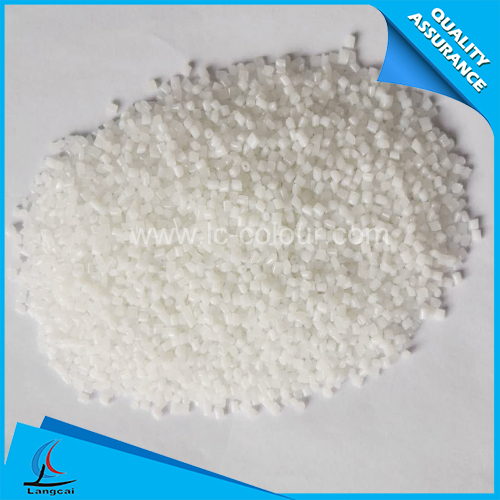
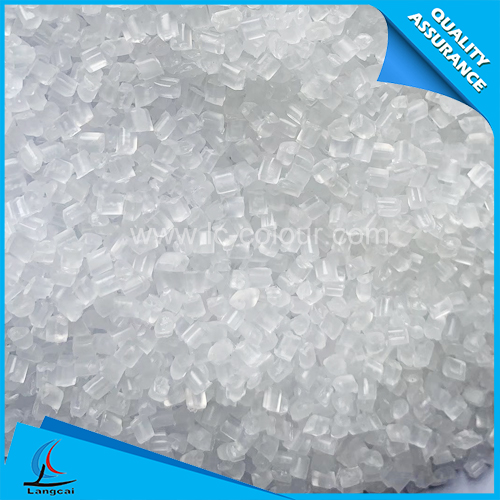
What is a color masterbatch?
Color masterbatch is common to say that the masterbatch is a plastic particle of the manufacturer with a resin raw material and a pigment auxiliary, and the main function is coloring, which has been mixed with the matrix resin, so the user is directly with the matrix resin and other The auxiliary agent can obtain a colorful plastic product. That is, the color masterbatch is the raw material of the plastic colorant.
We sometimes add a coupling agent when producing plastic products and plastic masterbits, then which varieties have the coupling agent, the following small series gives you a short.
Silane coupling agent
Silane coupling agent has vinyl trichlorosilane, vinyl triethoxysilane, vinyl trimethoxysilane, vinyl three (β-methoxyethoxy) silane, etc., most silane coupling agents It can be used on the top of polyethylene.
Di-titanate coupling agent
The titanate coupling agent can be divided into monoalkoxy, a monoalkoxype phosphate type, chelating type, and a coordinate type according to its chemical structure.
Single alkoxy-based type is very sensitive to water, only fillers that are calcined by calcium carbonate and calcium sulfate.
Single alkoxyptide-type phosphate type is less sensitive to water, which can be used to treat generally dried clay, talc and quartz powder.
The chelating type is characterized by a good hydrolysis, a water solution system that can be used for moist fillers or polymers.
The role of coordination titanate is similar to the monoalkoxy, but it does not have a resin and other auxiliaries, which can be applied to epoxy resin, polyester, polyurethane, alkyd or ester and ester. Polyvinyl chloride of a plasticizer, etc.
- Batch‑to‑batch Color Deviation of Colored Polyester Yarn: Easily‑ignored
- Rapid Pressure Rise of Polyester Spinning Pack: How to Evaluate Dispersion Performance of
- Functional Masterbatch Development for Nonwovens: What Does the New Anti-Slip Technology I
- How Can Mono Color Masterbatch Adapt to Different Plastic Applications? Key Factors from C
- Plastic Processing Shifts to Multi‑variety & Small‑batch Production, Mono̴
- Peak Season for Plastic Processing in Golden Autumn|Yantai Liangcai Plastic Technology Co.
- Spinning Refinement Upgrade Drives Process‑oriented Development of Polyester fiber m
- Polyester fiber masterbatch, Special Coloring Material for Chemical Fiber Dope‑dyein
- Steady Growth in Plastic Coloration Market, Mono Color Masterbatch Expands Application wit
- Custom Mono Color Masterbatch Supplier | Yantai Langcai Plastic Technology